
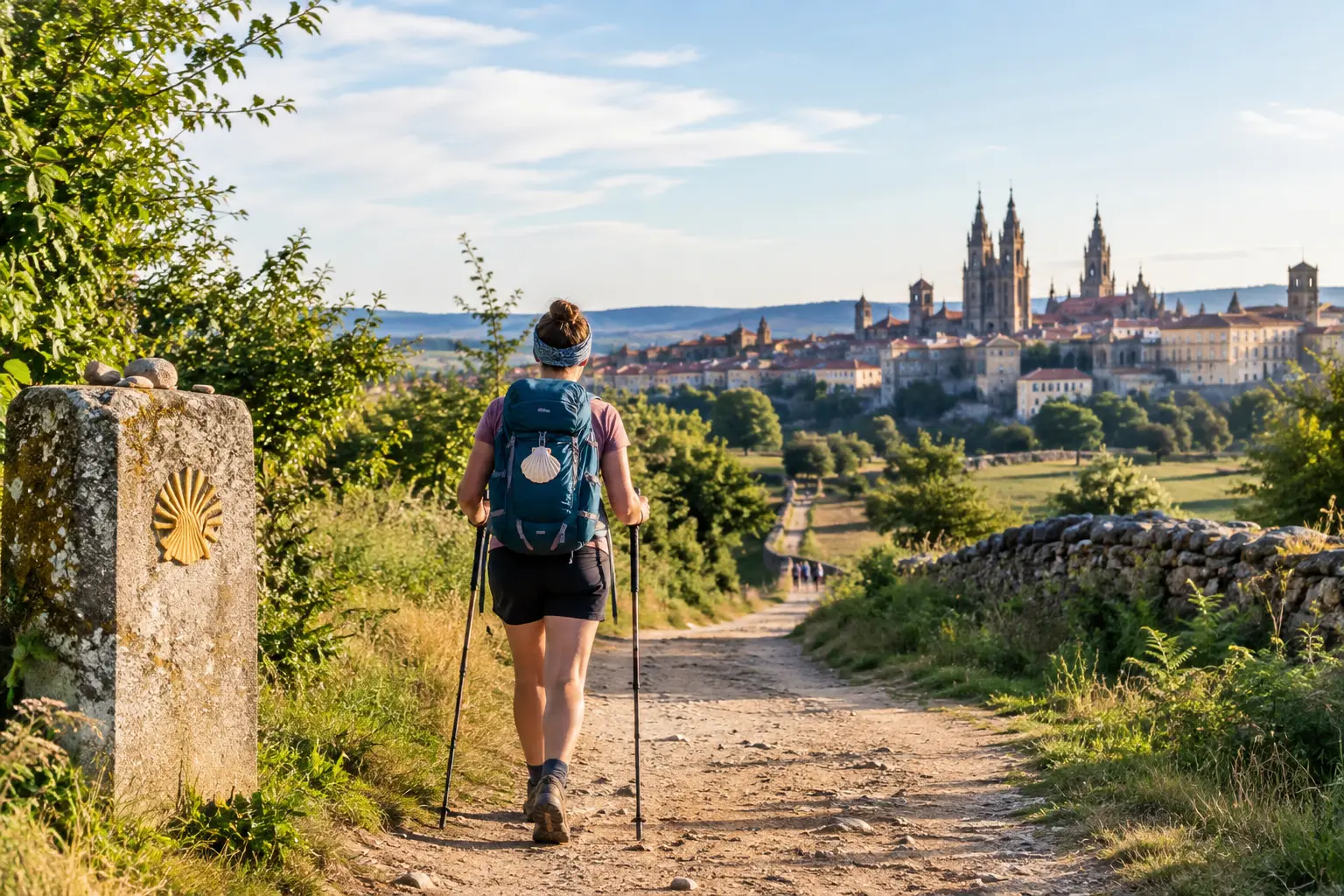
For many pilgrims, May, June, September, or early October offer a good balance of daylight, open pilgrim services, manageable temperatures, and fewer crowds than the height of summer. But the right season depends on how you handle heat, rain or busy albergues.
The Camino Francés runs nearly 800 km from Saint-Jean-Pied-de-Port to Santiago de Compostela, crossing very different landscapes. A pleasant morning in the foothills of the Pyrenees can be followed by strong sun on the Meseta, while Galicia may bring cool rain at almost any time of year. Choose a season for the whole route, not just the weather you picture at the start.
For more information see our Camino Francés Guide which covers the route, stages, scenery and practical considerations in more detail.
When to walk Camino Frances: the seasonal picture
| Season | What to expect | Best for |
|---|---|---|
|
Spring April to June |
Green landscapes, changeable weather, rising pilgrim numbers | Walkers who enjoy mild days and do not mind rain |
|
Summer July to August |
Long days, busy towns, intense heat in central Spain | Those tied to school vacations who can start early |
|
Autumn September to October |
Warm early fall days, harvest landscapes, cooler evenings | Pilgrims seeking a balanced, social Camino |
|
Winter November to March |
Quiet trails, short days, cold and wet conditions, fewer services | Experienced walkers with flexible plans |
Spring: green, sociable, and unpredictable
April can be beautiful, especially through Navarre and La Rioja, but it is not reliably warm. Snow, wind, and rain are still possible in the Pyrenees, and cold mornings can continue well into May. If beginning in Saint-Jean-Pied-de-Port, check local conditions and route notices shortly before setting out.
May is one of the strongest choices for first-time pilgrims. The countryside is green, most pilgrim infrastructure is open, and daytime temperatures are often comfortable for walking. It can still be wet in Galicia, so waterproof layers matter more than hoping for a dry forecast.
June brings steadier warmth and long daylight hours. It also brings larger numbers of pilgrims, particularly from Sarria onward, where people join the final section to Santiago. Book ahead when you need a private room or have a fixed daily schedule, especially in popular stopping towns.
Summer: possible, but plan around the heat
July and August are the hardest months on the Camino Francés for many walkers, not because the route is impossible, but because heat changes the rhythm of every day. On the Meseta, the long, exposed stretches between Burgos, León, and Astorga can feel particularly demanding. Temperatures may rise well above 30°C, and shade can be limited.
A summer Camino works best when you begin walking at first light, carry enough water, take a real midday break, and accept shorter stages when needed.
Summer is also the busiest period. Albergues, cafes, and trail conversations are lively, and many people value that shared energy. The trade-off is less spontaneity around beds and more pressure on the final 100 km. Around the Feast of Saint James on July 25, Santiago can be especially busy.
For clothing, think sun protection before style: a breathable shirt, hat, sunglasses, and a layer that covers shoulders and arms when needed. Save a Camino-inspired T-shirt or Hoodie for the evening or for the walk into Santiago if you want a clean, comfortable memento rather than another sweat-soaked hiking layer.
Autumn: often the best overall balance
September is a favorite month for good reason. The fiercest summer heat usually begins to ease, the days remain long enough for unhurried stages, and the route still has a lively pilgrim community. Early September can be warm, particularly in Castilla y León, while late September brings cooler mornings and more pleasant afternoons.
October is excellent for walkers who prefer a quieter trail and are comfortable with more variable weather. Vineyards and fields take on autumn color, and towns often feel less pressured than in midsummer. By the second half of the month, however, rain becomes more likely in Galicia and daylight shortens noticeably.
Autumn pilgrims should pack for temperature swings. A cool morning layer, a warm midlayer for evenings, and dependable rain protection are more useful than carrying several heavy tops. Check the forecast regularly, but pack for the pattern of the season rather than a single sunny prediction.
Winter: quiet, serious, and not for every first Camino
A winter Camino Francés can be deeply rewarding for people seeking solitude, but it asks more of you. Some albergues, cafes, and small-town services operate on reduced hours or close for the season. Days are short, surfaces can be icy, and rain in Galicia can turn minor discomfort into a long, cold day.
Starting in Saint-Jean-Pied-de-Port is the most complicated part of a winter plan because the high mountain crossing is not a casual alternative route decision. The lower Valcarlos route may be used when open, but it also requires careful attention to weather, roads, and local advice. In severe conditions, changing your start point or postponing is wiser than forcing the traditional beginning.
If winter is your only opportunity, build in rest days, carry warmer layers than you would in spring or fall, and confirm lodging a day or two ahead. It is also worth having a flexible budget for a private room or taxi if weather makes your intended stage unsafe.
Choose your dates by your priorities
Weather is only one part of the decision. If you want companionship, June and September offer a strong social atmosphere without the peak intensity of August. If you value quiet, consider late April, May, late September, or October. If your dates are fixed in July or August, adjust your daily plan rather than abandoning the idea altogether.
Your walking pace matters too. A pilgrim taking five or six weeks from Saint-Jean-Pied-de-Port experiences seasonal change along the way. Someone starting in mid-May may arrive in Santiago in June, when the final stages are notably busier. A two-week walk from León, Astorga, or Sarria has a different set of practical considerations, particularly around bed availability.
Religious dates and local holidays can also affect crowds and lodging. Semana Santa, Easter week, varies each year and can make popular towns busier early in the season. The same is true of major summer holidays and the days around July 25. If you are traveling with a group or need specific accommodation, reserve selectively rather than assuming every stage will be easy to arrange on arrival.
Practical preparation for every season
Whatever month you choose, prepare for the route in front of you rather than packing for an idealized Camino. A few habits make a bigger difference than chasing the perfect date:
- Test your footwear on consecutive walking days before Spain. Wet feet, heat, and repeated descents reveal problems that a short weekend hike may not.
- Carry layers you can add or remove easily. Conditions can change sharply between an early start, a windy ridge, and an afternoon arrival.
- Keep rain gear accessible, especially after León and on the approach to Galicia. A jacket buried at the bottom of a pack rarely gets used in time.
- Plan water carefully in hot weather, but do not overload yourself with unnecessary weight where regular refill points are available.
- Leave room in your itinerary for rest, blisters, storms, and the unexpected conversation that becomes part of your Camino.
A lighter pack is useful in every season, though not at the expense of safety. In cold or wet months, warmth and dry clothing earn their place. In summer, a sun hat and extra water capacity may be more valuable than another evening outfit.
Join The Community
Get the latest Camino guides, packing tips, and historical insights delivered to your inbox. Join a community of fellow pilgrims preparing for their journey.
The Camino has no prize for choosing the perfect month, only the daily work of noticing what the road gives you. Buen Camino!