
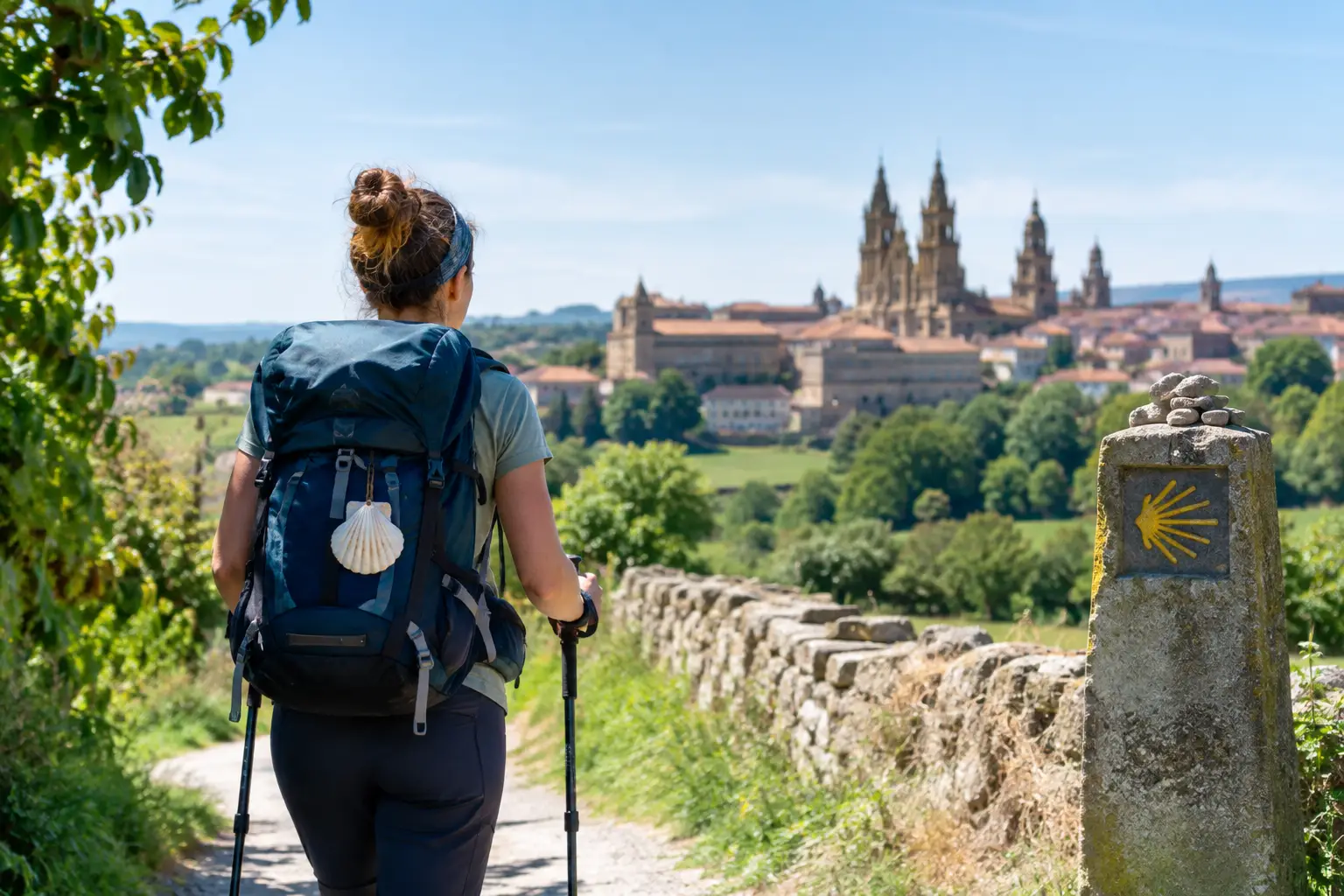
A good beginner training plan prepares you for the rhythm of the Camino: walking several days in a row, carrying the pack you will actually use, and recovering well enough to enjoy the villages, fellow pilgrims, and quiet stretches between them. If you are new to regular exercise, have an existing injury or health condition, or have concerns about increasing your walking distance, consider speaking with a qualified healthcare professional before starting a new training programme. Build up gradually and adjust the plan if you experience persistent or worsening pain.
For most first-time pilgrims, 8 to 12 weeks is a sensible runway. Start earlier if you are currently inactive, have a previous injury, are carrying a heavier pack, or expect to walk a hillier route such as parts of the Camino Primitivo. The aim is not to chase huge single-day mileage at home. It is to build repeatable walking fitness without arriving in Spain already sore.
What You Need to Train For on the Camino
A Camino day is different from a Saturday hike. You may walk 15 to 20 km, spend hours on pavement or compact trail, stop for coffee, and then do it again the next morning. Even relatively gentle routes such as the Camino Francés or the Portuguese Coastal Route can be demanding when your feet are warm, your pack is rubbing, and you have been walking for a week.
Your training should develop four things:
- Walking endurance for long, unhurried days
- Leg and core strength for hills, descents, and pack carrying
- Foot resilience and a blister-prevention routine
- Recovery habits for consecutive days on the trail
You do not need to duplicate every condition at home. Flat terrain can still build endurance; stairs, a treadmill incline, or local hills can cover some of the climbing. What matters most is gradually increasing time on your feet.
A 10-Week Beginner Camino Training Plan
Use this plan as a framework, not a test you must pass perfectly. Distances are approximate. If your body responds better to time, walk for the suggested effort rather than watching the mileage. Keep most walks easy enough that you can hold a conversation.
| Weeks | Walking | Long / Back-to-Back Walks | Main Focus |
|---|---|---|---|
| 1–2 | 3 days/week | 60–75 min long walk | Build consistency and basic endurance |
| 3–4 | 3 days/week | 8–11 km long walk | Add a light pack, hills and test footwear |
| 5–6 | 3–4 days/week | 11–14 km + 6–10 km | Build back-to-back walking ability |
| 7–8 | 3–4 days/week | 14–18 km + 10–13 km | Practise a realistic Camino rhythm |
| 9 | 3–4 days/week | 16–19 km on two days | Rehearse your Camino routine |
| 10 | Reduced volume | Reduced walking | Taper and arrive rested |
The table gives you the basic progression. Keep most walks at an easy, conversational pace and increase distance gradually. By the final weeks, practise with the footwear, socks, clothing and pack you expect to use on the Camino.
If a particular week feels too demanding, repeat the previous week rather than forcing the progression. The goal is to arrive in Santiago prepared and healthy, not to complete a training challenge.
Strength Work That Helps Without Taking Over Your Week
Two short sessions per week are enough for many beginners. Strength work is particularly useful if you live somewhere flat, will carry a pack, or have had knee discomfort on descents.
Choose controlled movements rather than complicated gym routines: squats or chair stands, step-ups, reverse lunges, calf raises, glute bridges, and dead bugs or planks. Two or three sets of 8 to 12 repetitions is plenty to start. Step-ups deserve special attention because they resemble climbing and make each leg work independently.
Do not add a hard leg workout the day before your longest walk. The purpose is to support your walking, not to leave you too sore to train.
Train Your Feet, Not Just Your Legs
Foot problems can turn a beautiful stage into a long negotiation. During training, notice hot spots early. A hot spot is the warning before a blister, and it is easier to handle during a break than after the skin has broken.
Try your preferred sock system on longer walks. Some pilgrims like a thin liner under a hiking sock; others do best with one well-fitting pair. There is no universal answer. The useful system is the one that stays dry enough, does not bunch, and works with your particular shoes.
Trim toenails straight across, let shoes dry fully between walks, and practice applying tape or blister protection before you need it. If you use trekking poles, train with them too. Proper pole use can reduce strain on descents, but poles that are the wrong height or used only occasionally can feel more awkward than helpful.
Match Training to Your Route and Stage Plan
Your route changes the emphasis, but not the fundamentals. The Camino Francés has a mix of rolling terrain, long open stretches, and some memorable climbs. The Portuguese Coastal Route may feel gentler in places but can still mean hard surfaces, wind, and long walking days. The Primitivo calls for more hill preparation and a conservative approach to stages.
Your intended daily distance matters even more. Someone planning 14 to 16 km per day can train differently from someone hoping to cover 25 km daily. There is no prize for following another pilgrim’s schedule. Build your plan around the distance you want to walk, then leave room for weather, detours, a lingering blister, or an afternoon you simply want to spend in a town.
Clothing and Pack Practice Matter
A pack that feels fine at 5kg can feel very different at 10kg. Weigh it before your longer practice walks and remove items that have no clear job. Water weight changes through the day, so account for it rather than pretending it does not exist.
Wear moisture-managing layers that do not chafe, and test them in warm and wet conditions when possible. A soft Camino-inspired T-shirt from Buen Camino Store can be a comfortable rest-day layer or travel shirt, but your walking kit should always be chosen for fit, weather, and how it performs under pack straps.
When to Adjust the Plan
A little muscle fatigue is normal. Pain that changes your stride is not. Scale back for several days if you develop persistent heel pain, shin pain, knee swelling, numbness, or a blister that is worsening rather than settling.
Missing a week does not erase your preparation. Resume at a level that feels manageable instead of trying to make up every lost mile. The Camino rewards patience long before you reach the trail.
Frequently Asked Questions
How far should a beginner walk before starting the Camino?
Aim to complete back-to-back training walks that resemble your likely first stages. For many beginners, that means one day of 14 to 18 km followed by a shorter 12 to 14 km day. If your planned Camino stages are shorter, train for those distances instead.
Should I train with the full weight of my Camino pack?
Yes, but build toward it. Start light, then add weight slowly over several weeks. Training with the pack reveals shoulder rubbing, hip-belt issues, and packing mistakes that are much easier to fix at home.
Can I prepare for the Camino by walking on a treadmill?
Yes. A treadmill is useful for building walking time and using incline settings. Add outdoor walks when you can, because pavement, uneven ground, weather, and descents all feel different outside.
Join The Community
Get the latest Camino guides, packing tips, and historical insights delivered to your inbox. Join a community of fellow pilgrims preparing for their journey.
The best preparation is not a punishing final hike. It is the quiet confidence of knowing that you can wake up, lace up, and walk again. Buen Camino!