
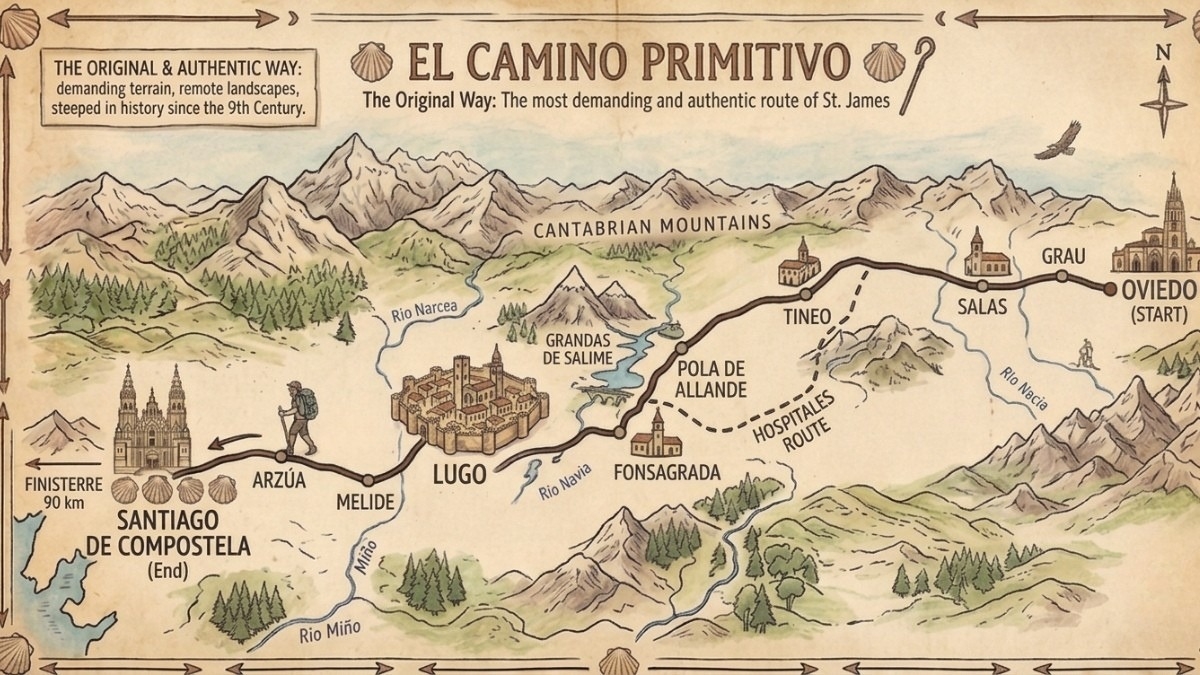
Those travellers seeking a deeper, more resonant connection to the roots of pilgrimage are increasingly turning to the Camino Primitivo. Also known as the Primitive Way, its name does not suggest a lack of infrastructure, but rather its status as the original path. It is the oldest recorded route of the Camino de Santiago, offering a rugged, quiet alternative to the crowded French Way. In 2018, just over 15,000 pilgrims chose this trail—a mere fraction of those on the Francés— these travellers are drawn by a landscape that prioritizes silence, space, and a challenging physical authenticity that the more popular routes no longer have.
1. The King’s Legacy: Walking the Route of the First Pilgrim
Walking the Camino Primitivo is a step back into the origins of pilgrimage in Spain. This route traces the footsteps of King Alfonso II of Asturias, known as “the Chaste,” who, in the early 9th century (around 813 AD), became the first recorded pilgrim. After news of the discovery of the Apostle’s remains, Alfonso II traveled from his court in Oviedo to what is now Santiago de Compostela. His journey was not only devotional; he supported the construction of the first sanctuary over the tomb, hence establishing Santiago as a major spiritual centre and a unifying symbol for Christian kingdoms during the Reconquista.
Beginning your Camino in Oviedo connects you directly to this powerful historical and spiritual legacy, honouring the origins of the pilgrimage before heading west over the mountainous terrain of northern Spain.
Source: Britannica Editors. “Alfonso II.” Encyclopedia Britannica.
2. Strategic Starting Points: Choosing Your Gateway to Santiago
Selecting where to begin your journey is a matter of both timeframe and physical condition. The Camino Primitivo joins the Camino Francés in the Galician town of Melide, meaning the final 54 kilometers are shared with the masses.
| Starting Point | Distance (km) | Est. Duration | Difficulty |
|---|---|---|---|
| Oviedo | 321 km | 13–16 days | Challenging |
| A Fonsagrada | 170 km | 7–9 days | Moderate |
| Lugo | 104 km | 4–5 days | Easy / Mod |
Starting in Oviedo is the gold standard for authenticity, though it is categorized as challenging or difficult due to a grueling cumulative elevation gain of approximately 8,000–9,000 meters. A Fonsagrada (named for its “Sacred Fountain”) offers a beautiful entry into Galicia through the Fontem Albei, a site of ancient Roman and pagan significance. For those with limited time, beginning in Lugo provides the minimum 100km distance required to earn the Compostela certificate.
3. The Great Divide: The Hospitales Route vs. Pola de Allande
At the small village of Borres, the path bifurcates, presenting the pilgrim with the most significant tactical decision of the trip.
- The Hospitales Route (The High Path): This is the most “original” variant, traversing a high-altitude ridge (above 1,100m) with zero services or villages. It passes the evocative ruins of the ancient hospitals of Fanfaraón and Valparaíso. These shelters were founded centuries ago precisely because the terrain was so inhospitable that pilgrims were frequently dying in the mountain snow. It is breathtakingly beautiful but dangerous in poor visibility.
- The Pola de Allande Route (The Valley Path): This route drops into the valley, offering more albergues and services. While it is safer during the notorious Asturian mists, don’t be fooled: it requires a punishing, steep ascent up the Puerto del Palo to rejoin the main trail.
3. Lugo: A Night Within the World’s Only Intact Roman Walls
The city of Lugo is a standout destination, anchored by its 3rd-century UNESCO-listed walls. These are the only fully intact Roman walls in existence, stretching 2km and reaching heights of 12 meters. Check out the local Tourist Office for more info.
For the modern pilgrim, the tradition is to walk the entire perimeter atop the walls before exiting the city through the Porta Miñá (the ancient gate used by those heading toward Santiago). If your arrival coincides with June, you will witness the Arde Lucus festival, where the city reverts to its Roman and Celtic roots. Regardless of the month, you must try the Galician staple, Polbo á Feira (octopus with paprika and olive oil), traditionally served on wooden plates.
4. Accommodation – Where to stay and how much to pay
Accommodation on the Camino Primitivo primarily consists of three main categories: pilgrim hostels (albergues), guesthouses/casas rurales, and hotels.
| Type | Avg. Price | Key Features |
|---|---|---|
| Municipal / Parish Albergues | €8 – €12 | Budget-friendly, historical settings e.g. Albergue de Cornellana, no advanced bookings, requires credential. |
| Private Albergues | €15 – €22 | Better amenities (lights/plugs), smaller dorms, communal dinners. |
| Donativo Albergues | Donation | Pay what you can, highly social, communal meals e.g. Albergue de Bodenaya. |
| Guesthouses / B&Bs | €25 – €50 | Privacy and comfort, found in most larger towns, private rooms. |
| Hotels | Varies | Full service, available in major cities (Oviedo, Lugo), ideal for a “reset” night. |
Practical Considerations
- Booking: During peak season (July and August), it is essential to book in advance, especially in small villages with limited beds. In the shoulder seasons of May, June, and September, you can often walk without a reservation if you arrive early.
- Winter Travel: Many albergues reduce their capacity or close entirely during the winter months, making careful planning and checking ahead vital.
5. Practical Wisdom: Packing for the Asturian-Galician Climate
The humidity of the north coast and the volatility of the mountains demand a pragmatic gear list. Beyond the standard boots and layers, consider these essentials:
- Moisture Management: Use a “three-season” layering system with merino wool. Carry a high-quality rain jacket and a lightweight poncho—especially in Galicia, where the rain can be relentless.
- The “Credencial” Kit: Keep your pilgrim passport in a Ziploc bag. A wet credencial can lead to illegible stamps, complicating your Compostela claim.
- The Albergue Survival Bag: Most albergues have limited kitchenware, so a plastic spork is invaluable. Bring washing pegs to hang laundry on communal lines, and earplugs to drown out the inevitable chorus of snorers in the dorms.
- Safety Tech: Download the AlertCops app and save 112 (the European emergency number). If you prefer setting off before dawn to beat the heat, reflective clothing is a non-negotiable safety requirement for road sections.
6. Frequently Asked Questions
1) How difficult is the Camino Primitivo for beginners?
The Camino Primitivo (the “Original Way”) is widely considered the most physically demanding of all the major Camino routes. For a complete beginner, it is a significant challenge, though certainly achievable with the right preparation.
| Category | Primary Challenges | Impact on Beginners |
|---|---|---|
| 1. Terrain & Elevation | Constant mountain climbs (500m–1000m daily) with steep descents. | High physical strain; requires leg strength and endurance. |
| 2. Weather & Path | High rainfall, deep mud, and exposure to fog in high passes. | Increases fatigue and slip risk; requires waterproof gear. |
| 3. Logistics | Fewer towns; some 25km stretches have zero services. | Less flexibility to stop early; requires careful food/water planning. |
If you are fit: If you have hiking experience or a good base level of fitness, you can certainly do the Primitivo as your first Camino. Many people love it because it is quieter and more scenic than the popular routes. It is also the original and perhaps the more authentic medieval pilgrim experience.
2) Camino Primitivo Ruta de los Hospitales vs Pola de Allande?
The choice between the Ruta de los Hospitales and the Pola de Allande route is the most significant decision you’ll make on the Camino Primitivo. They diverge after Borres and rejoin at Puerto del Palo.
The Hospitales route is the “original” path taken by medieval pilgrims, while the Pola de Allande route is the “valley” alternative.
| Feature | Ruta de los Hospitales | Pola de Allande (Valley) |
|---|---|---|
| Difficulty | Extreme. High mountain ridges. | Challenging but manageable. |
| Services | Zero. No water, food, or shelter for 25km. | Full services: cafes, shops, and pharmacies. |
| Scenery | Epic, 360° mountain vistas. Historic ruins. | Lush forests, rivers, and village life. |
| Safety | Dangerous in fog or heavy rain. No exit points. | Safe in all weather. Paved options available. |
| Best For… | Experienced hikers in good weather. | Beginners or poor weather conditions. |
Choose Hospitales if -> The weather forecast is perfectly clear, you have plenty of water, your knees feel strong, and you want that “top of the world” feeling. It is arguably the most beautiful day you will spend on any Camino route in Spain.
Choose Pola de Allande if -> It is raining or foggy (you won’t see the views anyway and the mud is treacherous), you are low on supplies, or you prefer a warm meal and a social atmosphere in a town.
3) Packing list for Camino Primitivo?
4) Is Camino Primitivo safe for solo female pilgrims?
The short answer is yes. Thousands of women successfully walk it alone every year. In fact, more than 50% of all Camino pilgrims are women, many of whom are solo travelers.
| Category | Safety Profile | Advice for Solo Pilgrims |
|---|---|---|
| Crime & Harassment | Very low risk. The pilgrim community is supportive and self-policing. | Serious incidents are rare. Trust your intuition and stay in well-lit, populated areas. |
| Physical Isolation | High. You may walk for hours without seeing others, especially in the mountains. | Install the AlertCops App and ensure your phone is fully charged daily. |
| Trail Safety | Moderate. The main risks are weather changes, fog, or minor injuries. | Never walk in the dark. Start at dawn and aim to reach your albergue before sunset. |
| Social Environment | Very supportive. Solo travelers often form tight-knit “Camino families” quickly. | Stay in public albergues (hostels) to meet fellow walkers and share trail info. |
The “Guardian” App: AlertCops app is the official Spanish police safety app and works very well on the trail.
5) Last 100km of Camino Primitivo from Lugo to Santiago?
Starting the Camino Primitivo in Lugo is a popular choice for beginners or those with limited time. At approximately 100km–118km, this route meets the minimum requirement to receive your Compostela (certificate of completion) in Santiago.
| Stage | Destination | Distance | Terrain Type |
|---|---|---|---|
| Day 1 | A Ponte Ferreira | 26.5 km | Quiet farmland & minor hills. |
| Day 2 | Melide | 20 km | Forest tracks; joins French Way. |
| Day 3 | Arzúa | 14 km | Rolling hills; very social. |
| Day 4 | O Pedrouzo | 19 km | Eucalyptus forests & paved paths. |
| Day 5 | Santiago | 20 km | Enter the city and arrival at the Cathedral |
6) Availability of Albergues on Camino Primitivo 2026?
While the Primitivo is less congested than the French Way, its limited infrastructure means beds can fill up quickly in key mountain stages.
| Type | Price Range (2026) | Booking Policy |
|---|---|---|
| Municipal / Public | €8 – €12 | No reservations. First-come, first-served. |
| Private Albergue | €15 – €22 | Highly recommended to book 1-2 days ahead. |
| Hostals / Pensions | €40 – €70 | Best for rest days; book weeks in advance. |
Booking Tools: For 2026, a good resource for accomodation and practical information for each stage (spanish) is Gronze.com.
7) Camino Primitivo elevation profile and stage distances?
The Camino Primitivo is famous for its “sawtooth” profile. Unlike other routes that have one or two major peaks, the Primitivo features constant elevation changes throughout the first 200km.
- • See Detail on each stage at (spanish) Gronze.com.
- • The Hardest Day: Stage 5 (Pola de Allande to Berducedo) is the psychological peak. While the distance is short, you are climbing a massive mountain wall.
- • The Knee-Killer: The descent from Berducedo toward Grandas de Salime (Stage 6) drops nearly 800m in just a few miles. It is famously hard on the joints.
- • Total Elevation Gain: Over the full 321km, you will climb approximately 8,000 to 9,000 meters (cumulative), which is roughly the height of Mt. Everest from sea level.
8) Best time of year to walk Camino Primitivo to avoid rain?
| Season | Conditions | Beginner Verdict |
|---|---|---|
| Spring (May) | Mixed sun and showers; lush green hills. | Excellent, but bring high-quality rain gear. |
| Summer (July-Aug) | Driest and warmest; best mountain visibility. | Best for safety; hardest for bed availability. |
| Autumn (Sept) | Crisp mornings, stable days, trails still dry. | Ideal balance of weather and crowd levels. |
| Winter (Nov-Mar) | Heavy rain, mud, and possible snow. | Not recommended for first-timers. |
2026 Travel Note: Remember that Santiago Airport (SCQ) is scheduled for maintenance closures from late April to late May 2026. If you choose the “ideal” month of May, plan to fly into Asturias (OVD) and out of Porto (OPO) or Madrid.
9) Vegetarian and vegan food options on Camino Primitivo?
Small Towns and Villages
In smaller villages along the Camino Primitivo, you will often rely on staples found in almost any Spanish bar or restaurant:
- Vegetarian Staples: Tortilla Española (potato and egg omelet) is the most reliable vegetarian option. Bocadillos de queso (cheese sandwiches) and patatas bravas are also widely available.
- Vegan Options: These are more limited in rural areas. Pimientos de Padrón (fried green peppers) and Ensalada Mixta (request it “sin atún y sin huevo”—without tuna and egg) are common. For breakfast, tostada con tomate y aceite (toast with tomato and olive oil) is a vegan standard.
- The “Menú del Peregrino”: This three-course meal usually has at least one vegetarian starter (like a salad or vegetable soup). If the main course is meat-based, many restaurants are willing to serve two starters instead.
Larger Towns
| Location | Restaurant | Price Range | Link | Highlight |
|---|---|---|---|---|
| Oviedo | El Manglar | €12 – €18 | Website | Eco-cultural hub with a rotating vegetarian “Menú del Día.” |
| Lugo | A Seimeira | €15 – €20 | Website | 100% Vegan. Cozy spot near the Roman wall with fresh local menus. |
| Lugo | Biobocado | €8 – €15 | Website | Organic takeaway; ideal for packing a healthy lunch for the trail. |
| Melide | D’Obra | €25 – €40 | Website | Elevated dining; very accommodating to dietary needs where routes merge. |
| Santiago | TS – A Casa | €10 – €25 | Website | Hearty vegetarian comfort food with a welcoming, homey atmosphere. |
| Santiago | A Corre Vexeta | €15 – €30 | Contact | Creative and modern vegetarian dishes in the heart of the old city. |
Practical Tips for the Trail
-
Grocery Shopping:
In smaller towns like Grado, Salas, or Tineo, dedicated vegetarian restaurants are rare. Utilize local supermercados to stock up on nuts, hummus, fruit, and canned legumes.
-
Kitchen Facilities:
When booking albergues, check if they have a kitchen. Preparing your own pasta or lentil stews is the most reliable way to ensure a high-protein vegan meal in remote stretches.
-
Communication:
Learning phrases like “Soy vegano/a” (I am vegan) and “No como carne, pescado, ni marisco” (I don’t eat meat, fish, or shellfish) is essential.
10) How to get from Madrid to Oviedo starting point?
Transport Options: Madrid to Oviedo
| Method | Duration | Price Range | Details | Arrival Info |
|---|---|---|---|---|
| High-Speed Train (AVE/Alvia) | 3h 15m – 3h 30m | €25 – €75 | Departs from Madrid Chamartín. Prices vary based on how far in advance you book. | Oviedo Train Station (central location). |
| Bus (ALSA) | 5h – 6h | €30 – €55 | Departs Estación Sur or Airport T4. “Supra” service is at the higher end of the range. | Oviedo Bus Station (next to the train station). |
| Flight | 1h (Flight) + 45m (Bus) | €40 – €120 | Fly into Asturias Airport (OVD). Check Iberia or Vueling for the best rates. | Take the Alsa airport shuttle (€9) to Oviedo city center. |
Arriving at the Starting Point
Once you arrive in Oviedo, most pilgrims head directly to the San Salvador Cathedral to get their first stamp (sello) in their credential. The Cathedral is a convenient 10-15 minute walk from both the train and bus stations.
7. Latest designs from Buen Camino Store
-
Sarria | El Camino Francés | Camino de Santiago TShirt
Bundle OfferGet 2 or more T-shirts @ €22.50Original price was: €28.99.€24.99Current price is: €24.99. (incl. VAT) -
Porto | El Camino Portugués | Camino de Santiago Shirt
Bundle OfferGet 2 or more T-shirts @ €22.50Original price was: €28.99.€24.99Current price is: €24.99. (incl. VAT) -
Camino de Santiago | Santiago de Compostela | Bauhaus Design
Bundle OfferGet 2 or more T-shirts @ €22.50Original price was: €28.99.€24.99Current price is: €24.99. (incl. VAT) -
Camino de Santiago | St. James’ Way | Bauhaus Design
Bundle OfferGet 2 or more T-shirts @ €22.50Original price was: €28.99.€24.99Current price is: €24.99. (incl. VAT) -
Camino de Santiago Shirt | Peregrino | Bauhaus Design
Bundle OfferGet 2 or more T-shirts @ €22.50Original price was: €28.99.€24.99Current price is: €24.99. (incl. VAT) -
Camino de Santiago Shirt | Connections | Bauhaus Design
Bundle OfferGet 2 or more T-shirts @ €22.50Original price was: €28.99.€24.99Current price is: €24.99. (incl. VAT) -
Camino de Santiago | Buen Camino | Bauhaus Design
Bundle OfferGet 2 or more T-shirts @ €22.50Original price was: €28.99.€24.99Current price is: €24.99. (incl. VAT) -
Camino de Santiago Shirt | Funny Pilgrim Cat | One More Kilometre
Bundle OfferGet 2 or more T-shirts @ €22.50Original price was: €28.99.€24.99Current price is: €24.99. (incl. VAT) -
Camino de Santiago Hoodie | The Way | Santiago de Compostela
Bundle OfferAdd 1 T-shirt for €19.99Original price was: €49.99.€42.99Current price is: €42.99. (incl. VAT) -
Camino de Santiago T-Shirt | The Way | Santiago de Compostela
Bundle OfferGet 2 or more T-shirts @ €22.50Original price was: €28.99.€24.99Current price is: €24.99. (incl. VAT) -
Camino de Santiago Shirt | La Ruta del Norte | Vintage Badge
Bundle OfferGet 2 or more T-shirts @ €22.50Original price was: €28.99.€24.99Current price is: €24.99. (incl. VAT) -
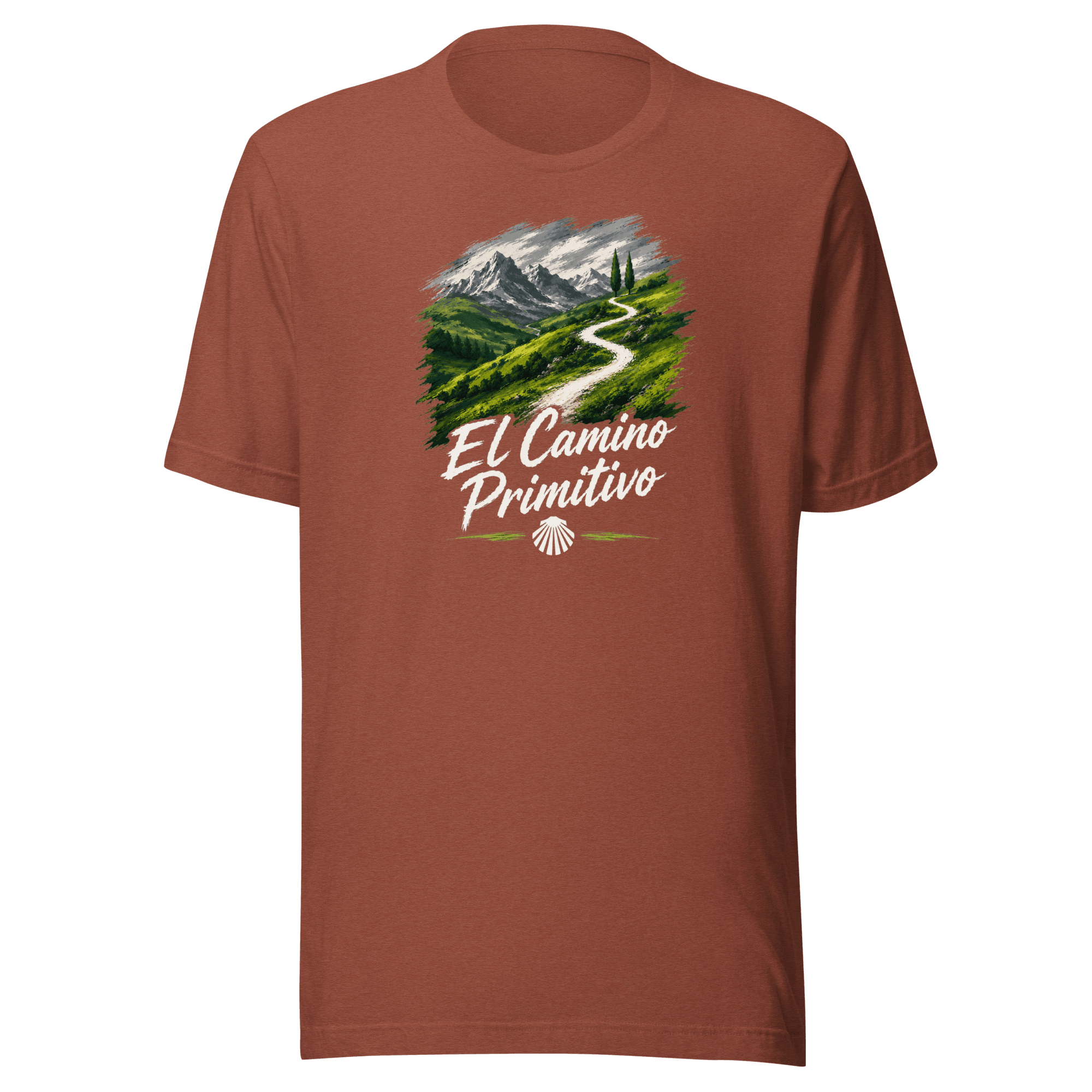
Camino de Santiago Shirt | Camino Primitivo | Vintage Badge
Bundle OfferGet 2 or more T-shirts @ €22.50Original price was: €28.99.€24.99Current price is: €24.99. (incl. VAT)






The Camino Primitivo is a journey defined by its contrasts: the sophisticated Roman history of Lugo and the wild, lonely ridges of the Hospitales; the physical exhaustion of the Asturian climbs and the quiet peace of the Galician forests. It remains a path for those who seek the silence required to hear their own thoughts.
The Original Way is not for everyone, but for those who walk it, the rewards are as enduring as the stones beneath their feet.
Leave a Reply