
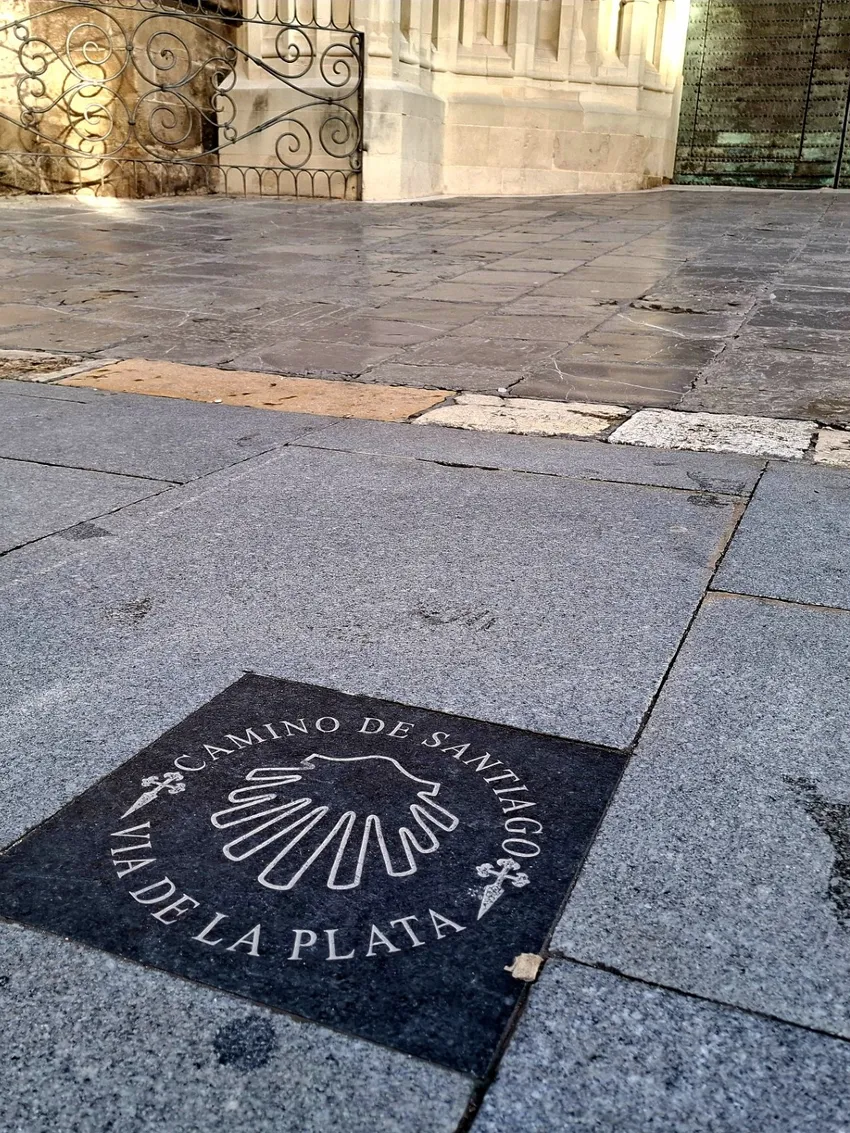
For many, the dream of a Spanish pilgrimage is synonymous with the Camino Francés. However, for the discerning veteran, the modern reality of the French Way—with its competitive “bed races,” high-season overcrowding, and an atmosphere increasingly leaning toward mass tourism—has sparked a migration elsewhere. To seek the true essence of the Camino de Santiago look south, toward the Roman heritage, Moorish tiles and orange blossoms of Seville.
The Vía de la Plata is a 1,000-kilometer test of endurance that stretches through the rugged heart of the Iberian Peninsula. It is the quietest, longest, and perhaps most spiritually introspective of the major routes.
1. The Etymological Ghost: Reclaiming the Paved Way
The Vía de la Plata or “Silver Way” is a misnomer. Contrary to popular imagination, the route was never a primary artery for the silver trade. The name is a product of phonetic drift—a confusion that Christopher Columbus documented as early as 1504, followed by the scholar Antonio de Nebrija in 1507.
The name likely evolved from the Arabic al-balat (the paved road) or the late Latin delapidata (stone road). Between Seville and Salamanca, the path is a literal open-air museum. You aren’t just traversing the landscape; you are treading upon the same stones as the legions of Scipio Africanus, passing through the triumphal Arch of Cáparra and alongside original milestones that have measured these exact distances for two millennia. In the south, you will even encounter waymarks featuring Arabic script, a nod to its identity as the Camino Mozárabe—the path of Christians living under Moorish rule.
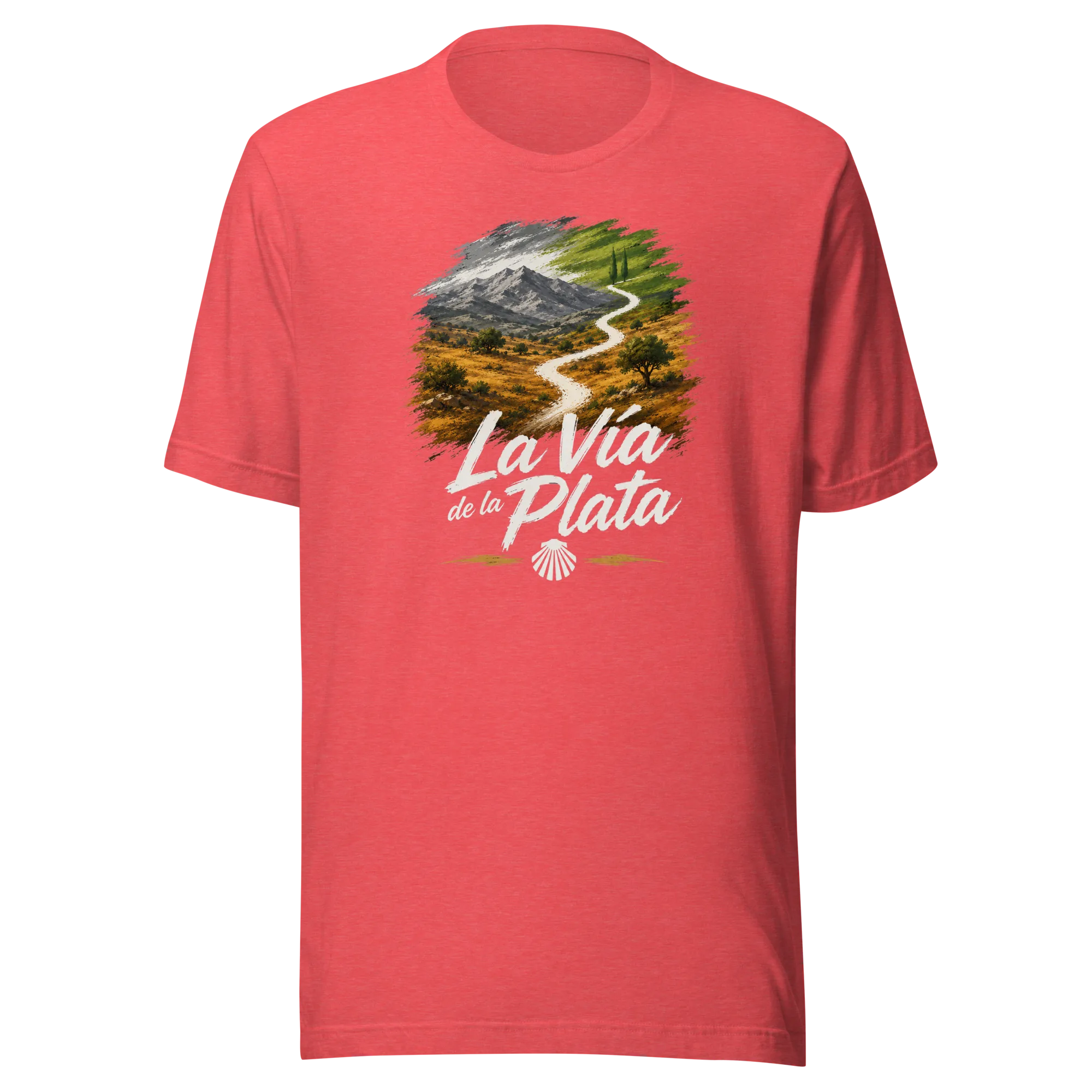
2. Finding Solitude in the Vastness
The statistics provided by the Pilgrim’s Office in Santiago are telling: less than 2% of all pilgrims arrive via this route. While the Francés handles hundreds of thousands, a walker on the Plata may cover 30 kilometers and encounter fewer than five other people.
This solitude fundamentally alters the psychological dimension of the journey. You will meet very few first-time pilgrims here; the route is the province of the long-distance specialist.
3. The Summer Heat is a Hazard, Not an Inconvenience
In Andalusia and Extremadura, the weather is not a matter of comfort; it is a matter of survival. During the summer months, temperatures routinely surge to 40°C–45°C (104°F–113°F). The landscape is often arid, and the heat radiated by the red earth and vast cereal fields can be debilitating.
Strategic timing is the veteran’s first defense. Discerning walkers utilize two specific windows:
- The Spring Logic (Late February to mid-April): This allows you to follow warming temperatures northward, witnessing the early bloom of the dehesa—ancient holm oak woodlands used for grazing—before the sun turns the landscape to tinder.
- The Autumn Logic (October): A reprieve as the summer heat breaks, replaced by mild walking temperatures and the golden hues of the harvest.
Ignoring these windows transforms a spiritual challenge into a dangerous physical gamble.
4. The Infrastructure “Void” and the Art of Planning
Unlike the popular northern routes where a café appears every five kilometers, the Vía de la Plata demands rigorous water and food logistics. The path is famous for its “voids”—long stretches of 20 to 30 kilometers through empty plains with no access to basic services.
This is a route where you cannot simply “wake up and walk.” You must map every stage with technical precision to avoid the risk of a night of forced bivouac in the Extremaduran wild. Consider the daunting logistics of stages such as:
- Carcaboso to Aldeanueva del Camino: 38 kilometers of near-total isolation.
- Alcuéscar to Cáceres: 37 kilometers through relentless, open terrain.
Advanced water management is essential; carrying at least two liters is the baseline. Furthermore, local rhythms remain strictly traditional: bars rarely open before 9:00 AM, and dinner in rural villages is seldom served before 8:30 PM.
Check out, Gronze.com for valuable info on stages and accommodation.
5. The Sanabrés Fork: The Ultimate Scenic Pivot
At the village of Granja de Moreruela—two days north of Zamora—the route offers a critical decision point. You may continue north to join the Camino Francés at Astorga (totaling 968 km), or you may pivot northwest onto the Camino Sanabrés (983 km).
The Sanabrés is the veteran’s favored variant. It serves as a dramatic scenic pivot, transitioning from the arid, flat plains into the lush, mountainous greenery of Galicia. The reward for enduring the southern heat is the “thermal crossroads” of Ourense, where natural hot springs offer physical restoration for legs that have endured nearly 900 kilometers. Along this section, keep a watchful eye for the unique, hand-carved waymarks by local sculptor Nicanor Carballo—stunning pillars of stone that symbolize the handcrafted, personal nature of this ancient road.
6. Big Numbers
7. FAQs
1) “Vía de la Plata last 100km Ourense to Santiago?
The final 100 km of the Vía de la Plata is widely considered one of the most beautiful, rewarding, and pleasantly quiet sections of the entire Camino de Santiago network. From the historic city of Ourense, this route runs a little over 100 KM to Santiago, which means you will be fully eligible to receive the Compostela certificate.
| Day | Stage / Route | Distance | Difficulty |
|---|---|---|---|
| Day 1 | Ourense to Cea | 22 km | Challenging |
| Day 2 | Cea to A Laxe / Dozón | 20 km | Moderate |
| Day 3 | A Laxe to Lalín / Bendoiro | 18 km | Easy |
| Day 4 | Lalín to Bandeira | 15 km | Easy |
| Day 5 | Bandeira to Ponte Ulla | 21 km | Moderate |
| Day 6 | Ponte Ulla to Santiago de Compostela | 21 km | Challenging |
2) What is the best time of year to walk Vía de la Plata?
Because the Vía de la Plata is the longest Camino route in Spain—stretching from Seville in the deep south all the way to Santiago de Compostela in the north—choosing your timing is absolutely critical. Getting the timing wrong means facing dangerous, scorching heatwaves with zero shade. The best times of year to walk the Vía de la Plata are Spring (late March to May) and Autumn (October).
- Walking the whole route (approx. 1,000 km): Start in late March or early April to avoid the brutal summer heat of the south.
- Walking only the final 100 km from Ourense: May, June, and September are fantastic windows, as Galicia’s northern climate stays much cooler and greener year-round than the southern regions.
3) Vía de la Plata albergues list 2026?
The accommodation landscape on the Vía de la Plata has undergone several changes. Because this route is far less populated than the Camino Francés, keeping up-to-date with active lodging is critical. Public/municipal albergues (often run by the Xunta de Galicia in the northern stretch) usually cost around €10 per bed, operate on a first-come, first-served basis, and require a pilgrim credential. Private albergues range from €16 to €25 and allow advance booking.
- The Credential is Required: You must have a physical Credencial (Pilgrim Passport) stamped along the way to access any of the €10 public Xunta albergues. You can buy one at the Ourense public albergue if starting there.
- Pack Your Own Utensils: Many public albergues in Galicia provide a communal kitchen with microwaves, but do not provide cooking pots, plates, or utensils. If you plan to cook to save money, pack a lightweight travel spork and pot.
4) Vía de la Plata walking stages Seville to Mérida?
The journey from Seville to Mérida marks the iconic opening section of the Vía de la Plata, leading pilgrims away from the vibrant heart of Andalusia and into the sprawling, historic plains of Extremadura. This stretch is a brilliant test of endurance, characterized by red-earth tracks, olive groves, Roman heritage sites, and beautiful but isolated landscapes that demand careful planning.
| Day | Stage / Route | Distance | Difficulty |
|---|---|---|---|
| Day 1 | Seville to Guillena | 23 km | Easy |
| Day 2 | Guillena to Castilblanco de los Arroyos | 18 km | Moderate |
| Day 3 | Castilblanco de los Arroyos to Almadén de la Plata | 29 km | Challenging |
| Day 4 | Almadén de la Plata to El Real de la Jara | 14 km | Easy |
| Day 5 | El Real de la Jara to Monesterio | 20 km | Moderate |
| Day 6 | Monesterio to Fuente de Cantos | 21 km | Easy |
| Day 7 | Fuente de Cantos to Zafra | 25 km | Moderate |
| Day 8 | Zafra to Villafranca de los Barros | 20 km | Easy |
| Day 9 | Villafranca de los Barros to Torremejía | 27 km | Challenging |
| Day 10 | Torremejía to Mérida | 16 km | Easy |
5) Cycling the Vía de la Plata route map?
| Stage | Route / Segment | Distance | Difficulty |
|---|---|---|---|
| Stage 1 | Seville to Almadén de la Plata | 69 km | Challenging |
| Stage 2 | Almadén de la Plata to Monesterio | 34 km | Easy |
| Stage 3 | Monesterio to Zafra | 46 km | Moderate |
| Stage 4 | Zafra to Mérida | 63 km | Moderate |
| Stage 5 | Mérida to Cáceres | 72 km | Challenging |
| Stage 6 | Cáceres to Galisteo | 74 km | Challenging |
| Stage 7 | Galisteo to Baños de Montemayor | 54 km | Challenging |
| Stage 8 | Baños de Montemayor to Salamanca | 91 km | Challenging |
| Stage 9 | Salamanca to Zamora | 67 km | Moderate |
| Stage 10 | Zamora to Granja de Moreruela | 41 km | Easy |
| Stage 11 | Granja de Moreruela to Tábara | 26 km | Easy |
| Stage 12 | Tábara to Puebla de Sanabria | 86 km | Challenging |
| Stage 13 | Puebla de Sanabria to A Gudiña | 53 km | Challenging |
| Stage 14 | A Gudiña to Laza | 35 km | Moderate |
| Stage 15 | Laza to Ourense | 57 km | Challenging |
| Stage 16 | Ourense to Santiago de Compostela | 105 km | Challenging |
6) Camino Sanabrés vs Vía de la Plata?
The Camino Sanabrés is a scenic, mountainous extension of the Vía de la Plata. If you walk the Vía de la Plata from Seville, you will eventually have to choose whether to continue straight north or diverge onto the Sanabrés variant.
- The Split at Granja de Moreruela: The full Vía de la Plata begins in Seville and moves directly north. After walking roughly 700 km, you arrive at the tiny village of Granja de Moreruela (just north of Zamora), where the path officially splits.
- The Astorga Route (Vía de la Plata Proper): You continue straight north to Astorga, where your path merges with the heavily trafficked Camino Francés for the final 250 km into Santiago.
- The Camino Sanabrés Variant: You turn northwest, cutting directly through the mountains of southern Galicia via Puebla de Sanabria and Ourense, completely bypassing the Camino Francés.
| Feature | Vía de la Plata (Astorga Route) | Camino Sanabrés (Ourense Route) |
|---|---|---|
| Starting Point | Seville (Full route) | Granja de Moreruela (Or Ourense for the final 100km) |
| Terrain | Flat, expansive Roman plains, red-earth farm tracks, and open *meseta*. | Rugged mountain passes, ancient oak forests, slate villages, and river valleys. |
| Crowd Levels | Extremely quiet until Astorga, then highly crowded on the Camino Francés. | Consistently quiet, isolated, and peaceful all the way to the gates of Santiago. |
| Logistics & Towns | Large city hubs (Salamanca, Zamora, Astorga) with massive historical infrastructure. | Small, deeply rural Galician hamlets with very limited bar/shop intervals. |
- Choose the Vía de la Plata via Astorga if: You love grand historical cities, Roman infrastructure, and want to experience the legendary camaraderie and buzzing social atmosphere of the main Camino Francés for your final week.
- Choose the Camino Sanabrés if: You want continuous peace and solitude from start to finish, enjoy more challenging mountainous ascents, prefer authentic green nature over urban walking, and want an undisturbed entry into Santiago de Compostela.
7) “Vía de la Plata packing list for summer?
8) Vía de la Plata vs Camino Francés?
Choosing between the Vía de la Plata and the Camino Francés is a choice between two completely different pilgrimage experiences. The Camino Francés is the bustling heart of the Camino network, while the Vía de la Plata is an epic, solitary journey across the wild expanses of Spain.
| Feature | Camino Francés (The French Way) | Vía de la Plata (The Silver Way) |
|---|---|---|
| Starting Point & Distance | Saint-Jean-Pied-de-Port (~780 km) | Seville (~1,000 km) |
| Popularity & Crowds | Extremely popular; accounts for roughly 50% of all pilgrims. High social energy. | Very quiet; accounts for only 2–3% of pilgrims. Deep solitude. |
| Infrastructure & Logistics | Unmatched. Towns, bars, and albergues every 5–8 km. Highly flexible. | Sparse. Stretches of 25–35 km with zero services or water. Demands rigid planning. |
| Terrain & Scenery | Pyrenees mountains, rolling vineyards, flat Meseta plains, and green Galician hills. | Red-earth tracks, vast olive groves, dehesa oak forests, and intense Roman history. |
| Best Season | Spring (May-June) and Autumn (September-October). Summer is busy but walkable. | Strictly Early Spring (March/April) or late Autumn. Summer is dangerously hot. |
- Choose the Camino Francés if: This is your first long-distance pilgrimage, you are traveling solo but want vibrant social connections, you prefer a highly flexible itinerary with endless services, or you want to experience the classic, historic traditions of the Camino.
- Choose the Vía de la Plata if: You have already walked a Camino and want a greater physical/logistical challenge, you are seeking profound solitude and introspection, you love Roman history, or you want to cross Spain from south to north away from standard tourist tracks.
9) Luggage transfer services Vía de la Plata?
The biggest thing to know is that you cannot wing it day-by-day on this route. On busier trails, you can simply write your name on an envelope in an albergue lobby in the morning—but on the Vía de la Plata, you must arrange the service in advance.
| Logistic Detail | Standard Rules & Requirements |
|---|---|
| Average Cost | €7 to €12 per stage, per bag (often cheaper if booking 5+ consecutive stages). |
| Weight Limits | Strictly enforced maximum of 15 kg to 17 kg per piece of luggage. |
| Morning Cutoff | Bags must be tagged and left at your accommodation reception by 8:00 AM. |
| Afternoon Delivery | Transporters guarantee delivery to your next location before 2:30 PM–3:00 PM. |
🎒 Service Providers
- Correos (Paq Mochila): The Spanish postal service is the most reliable option across the entire length of the Vía de la Plata and the Camino Sanabrés. Their seasonal service typically runs from Easter through October 31. Bookings must be submitted online before 8:00 PM the previous evening. You can set up your daily transfers directly via the El Camino con Correos website.
- Caminofácil: A popular private agency specializing in step-by-step luggage and taxi transport. They offer robust coverage across both the main Vía de la Plata route and the Sanabrés variant. You can check their rates and secure your transfers on the Caminofácil official website.
- No Public Albergues Allowed: This is a major rule. Luggage transfer services **cannot** deliver to public municipal albergues (like the Xunta network in Galicia). They only deliver to private albergues, pensions, or hotels that have a dedicated receptionist or an explicit agreement to receive bags.
- You Must Plan Ahead: Because you have to input your exact destination accommodation online the night before, your schedule loses a bit of spontaneous flexibility. You cannot change your mind halfway through a grueling 30 km stage and decide to stop early if your bag is already waiting for you in the next town.
- Carry a Daypack: Never send all your gear away. Because the Vía de la Plata has long stretches without shade or towns, you must walk with a small daypack containing at least 2 liters of water, snacks, a basic first-aid kit, and your physical Pilgrim Passport (Credential).
10) History of Roman Vía de la Plata milestones?
The Vía de la Plata was originally engineered by the Roman Empire as a commercial and military highway connecting the gold mines of northern Hispania (Asturica Augusta, modern-day Astorga) with the southern trade hubs (Hispalis, modern-day Seville). Along this massive stone road, Roman engineers erected cylindrical stone pillars called milestones (miliarios). These pillars are not just historical relics; they are an ancient GPS network that contemporary pilgrims still walk past today.
| Historical Element | Purpose & Description |
|---|---|
| Measurement | Placed exactly one Roman mile (*mille passus*) apart, which equates to roughly 1,480 meters or 1,000 paces. |
| Physical Scale | Carved out of solid granite, standing between 2 to 4 meters tall with a heavy, cylindrical shape buried deep in the ground to prevent theft. |
| Imperial Propaganda | Inscribed with the name and titles of the ruling Emperor (such as Trajan, Hadrian, or Nero) who funded or repaired that specific stretch of the road. |
| Logistics | Indicated the exact distance to the nearest major Roman administrative city, helping military legions and trade caravans manage their supplies. |
- Look for the Inscriptions: While many stones have been heavily weathered by two millennia of rain and wind, if you look closely or run your hands over the granite, you can still spot remnants of Roman lettering (Latin epigraphy) declaring imperial repairs.
- The Extremadura Highlights: The best-preserved sections of milestones can be found through the valleys of Extremadura, particularly in the **Valle del Jerte** and around the famous **Cáparra Arch**, where several milestones still line the original stone tracks.
- Modern Replicas vs. Originals: In recent years, local cultural associations have added modern, squared concrete markers to track modern kilometers. The authentic Roman versions are always completely round, massive granite cylinders.
8. Latest designs from Buen Camino Store
-
Sarria | El Camino Francés | Camino de Santiago TShirt
Bundle OfferGet 2 or more T-shirts @ €22.50Original price was: €28.99.€24.99Current price is: €24.99. (incl. VAT) -
Porto | El Camino Portugués | Camino de Santiago Shirt
Bundle OfferGet 2 or more T-shirts @ €22.50Original price was: €28.99.€24.99Current price is: €24.99. (incl. VAT) -
Camino de Santiago | Santiago de Compostela | Bauhaus Design
Bundle OfferGet 2 or more T-shirts @ €22.50Original price was: €28.99.€24.99Current price is: €24.99. (incl. VAT) -
Camino de Santiago | St. James’ Way | Bauhaus Design
Bundle OfferGet 2 or more T-shirts @ €22.50Original price was: €28.99.€24.99Current price is: €24.99. (incl. VAT) -
Camino de Santiago Shirt | Peregrino | Bauhaus Design
Bundle OfferGet 2 or more T-shirts @ €22.50Original price was: €28.99.€24.99Current price is: €24.99. (incl. VAT) -
Camino de Santiago Shirt | Connections | Bauhaus Design
Bundle OfferGet 2 or more T-shirts @ €22.50Original price was: €28.99.€24.99Current price is: €24.99. (incl. VAT) -
Camino de Santiago | Buen Camino | Bauhaus Design
Bundle OfferGet 2 or more T-shirts @ €22.50Original price was: €28.99.€24.99Current price is: €24.99. (incl. VAT) -
Camino de Santiago Shirt | Funny Pilgrim Cat | One More Kilometre
Bundle OfferGet 2 or more T-shirts @ €22.50Original price was: €28.99.€24.99Current price is: €24.99. (incl. VAT) -
Camino de Santiago Hoodie | The Way | Santiago de Compostela
Bundle OfferAdd 1 T-shirt for €19.99Original price was: €49.99.€42.99Current price is: €42.99. (incl. VAT) -
Camino de Santiago T-Shirt | The Way | Santiago de Compostela
Bundle OfferGet 2 or more T-shirts @ €22.50Original price was: €28.99.€24.99Current price is: €24.99. (incl. VAT) -
Camino de Santiago Shirt | La Ruta del Norte | Vintage Badge
Bundle OfferGet 2 or more T-shirts @ €22.50Original price was: €28.99.€24.99Current price is: €24.99. (incl. VAT) -
Camino de Santiago Shirt | Camino Primitivo | Vintage Badge
Bundle OfferGet 2 or more T-shirts @ €22.50Original price was: €28.99.€24.99Current price is: €24.99. (incl. VAT)








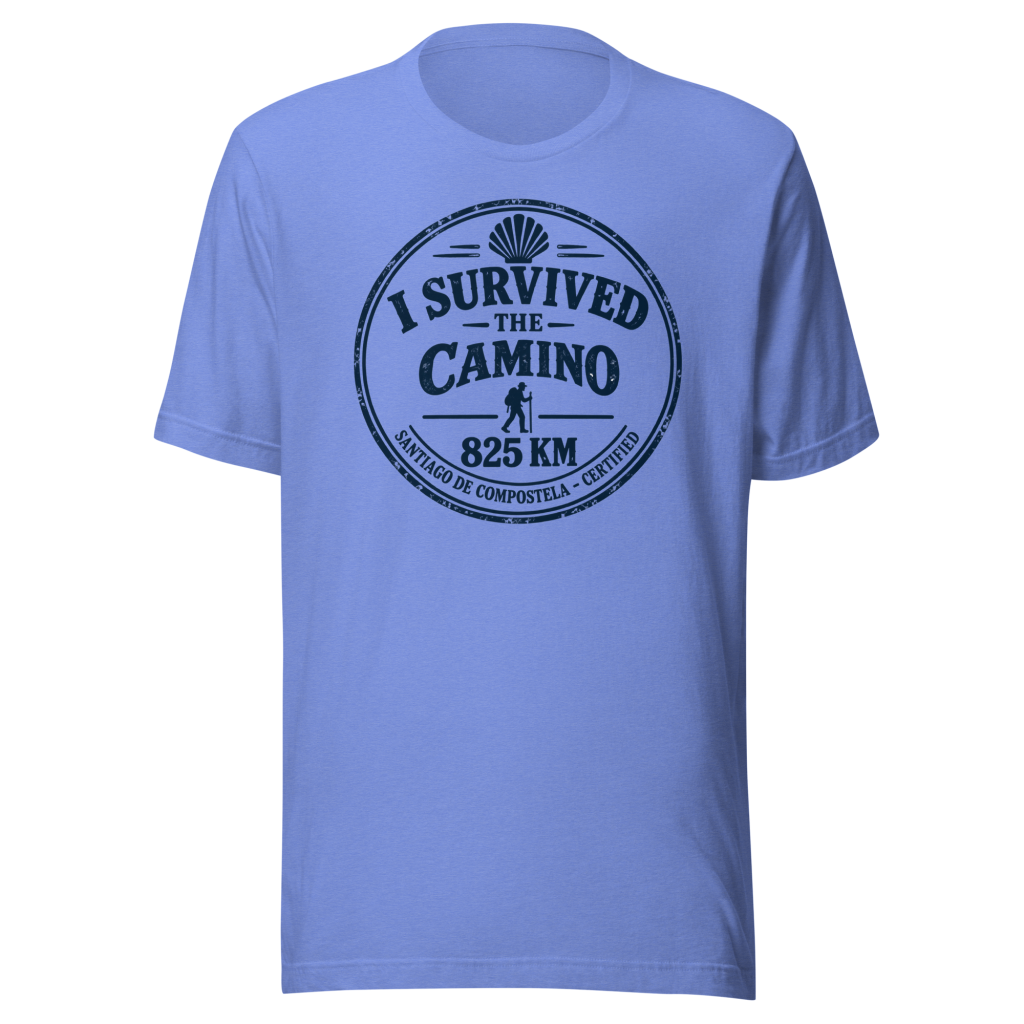
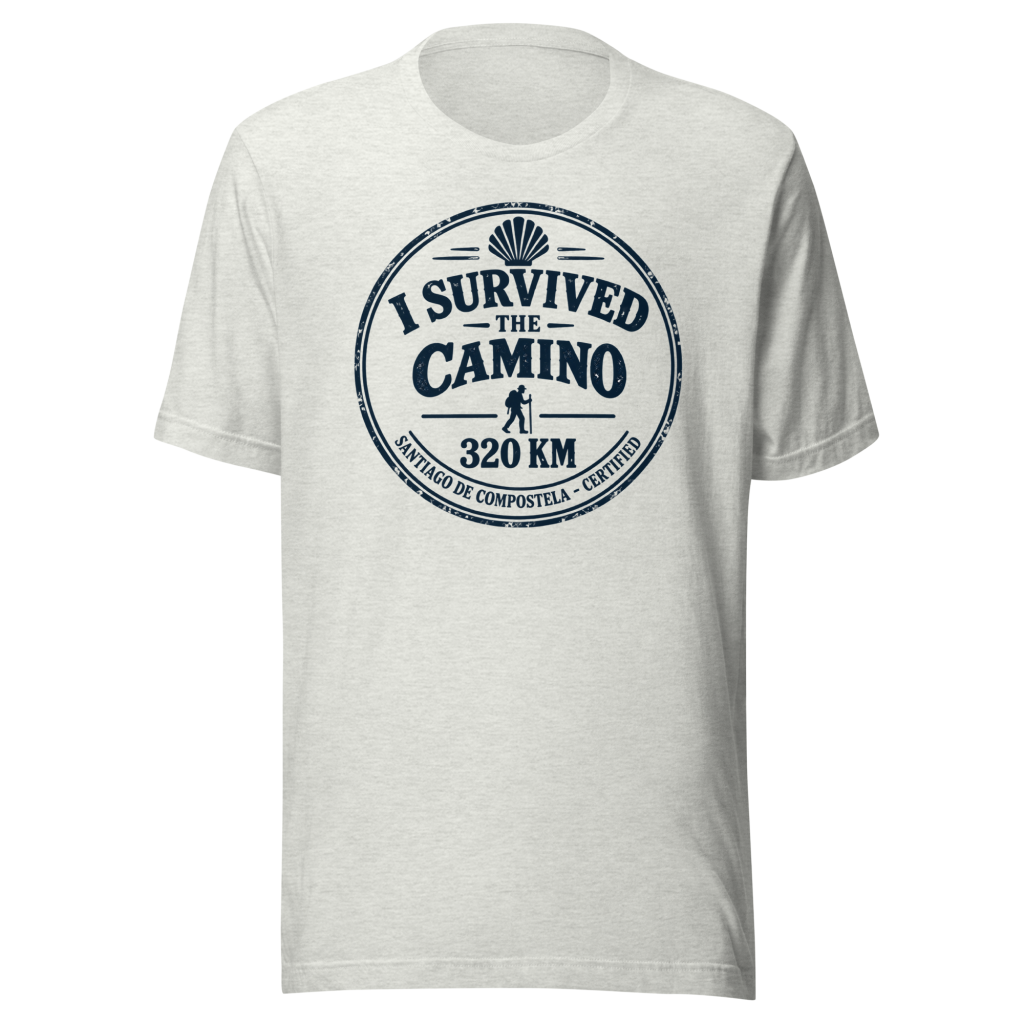
The Vía de la Plata is not a casual stroll; it is a grueling achievement. Because of its length and the self-reliance it demands, reaching the Cathedral in Santiago feels less like a tourist milestone and more like a profound life event. Ultreia et Suseia!
Leave a Reply