
Knowing how to treat Camino blisters promptly can often keep a small hot spot from becoming the reason you need to stop walking. The priority is simple: remove friction, protect the skin, and be honest about whether walking another stage is sensible.
Blisters are common on every Camino route, from the long pavement stretches of the Camino Francés to wet days on the Camino Portugués and steep descents in Galicia. They are not a failure of fitness or experience. They are usually a practical signal that your footwear, socks, moisture level, pace, or lacing needs attention.
Treat the problem at the first hot spot
A hot spot is the burning, tender patch that appears before a fluid-filled blister forms. Stop when you notice it, even if it seems minor. Five minutes of care at a fountain, café, or shaded bench may save you a painful evening and a lost walking day.
Dry the area carefully, including between your toes. Then cover the hot spot with a friction-reducing dressing, tape, or a properly fitted blister plaster. The goal is to create a smooth protective layer before repeated rubbing breaks the skin.
Do not tape over damp skin and hope for the best. Moisture makes tape shift, wrinkles create new pressure points, and the original irritation can worsen quickly. If your socks are sweaty or wet from rain, change into a dry pair before continuing.
How to treat Camino blisters once they form
The best approach depends on the blister’s size, location, and whether the skin roof is intact. A small blister on the side of a toe needs different care from a large, tense blister under the ball of the foot.
If the blister is small and unbroken
Leave the skin roof in place. It is your body’s natural protection for the tender skin underneath. Wash the area with clean water and mild soap when available, dry it well, and cover it with a padded blister dressing or non-stick sterile dressing secured with tape.
Reduce pressure around the blister rather than directly on top of it. A donut-shaped pad made from moleskin, felt, or foam can help, provided it lies flat and does not make your shoe too tight. Check the dressing after a few kilometers. If it has moved, replace it before the rubbing starts again.
If the blister is large, painful, and intact
A large fluid-filled blister can make walking nearly impossible, especially beneath the forefoot or heel. Because draining it can introduce infection, it is safer to have a pharmacist, clinic, or medical professional assess and drain it if necessary.
If professional care is not reasonably available and the blister is exceptionally painful or prevents you from walking normally, seek advice from a pharmacist or healthcare professional before attempting to drain it yourself. If it is drained, the blister roof should be left in place and the area covered with a sterile, non-stick dressing.
Never use a shared, dirty, or improvised needle, including one heated over a flame. If the dressing becomes wet, dirty, or loose, replace it with a clean dressing.
If the blister has torn
A torn blister needs clean, protected healing conditions. Rinse away dirt with clean running water, pat the skin dry, and leave any attached skin flap in place if it is clean and lying flat. Do not pull healthy attached skin away simply because it looks untidy.
Apply a non-stick sterile dressing and change it regularly. Avoid placing adhesive directly over raw skin whenever possible. A pharmacist in Camino towns can often help you choose a dressing that protects the wound without sticking painfully when removed. If the wound becomes increasingly red, warm, swollen, painful, or produces pus, seek medical advice promptly.
Fix the cause before you keep walking
Treating the blister alone is not enough. If the same friction continues, you will simply damage the skin again under the dressing.
Start with your shoes. Your toes should not hit the front on descents, and your heel should not lift excessively with each step. Shoes that felt comfortable on a short walk at home can become too tight after several hours, when feet swell from heat and distance. Loosen the forefoot laces if your toes feel compressed, or use a heel-lock lacing method if your heel is sliding.
Socks matter just as much. Choose clean, dry walking socks with a close fit and no thick seam across a pressure point. Some pilgrims prefer a thin liner sock under a hiking sock to reduce friction between fabric layers rather than against the skin. Others find one well-fitting technical sock works better. There is no universal answer, so test your system on training walks before departure.
Moisture also changes the picture. Rain, sweat, wet grass, and washing shoes without allowing enough drying time all soften skin and make it more vulnerable. Air your feet at breaks, change socks when needed, and take your shoes off at the end of the stage so they can dry properly overnight.
When to rest rather than push through
Camino culture values perseverance, but the pilgrimage is not improved by turning a treatable blister into an infected wound. Consider shortening the day, taking local transport for part of a stage, or taking a rest day if pain changes your gait or you are limping significantly.
Walking awkwardly to avoid pressure on one blister can strain your ankle, knee, hip, or lower back. This is especially relevant on long downhill sections, where altered foot placement can quickly lead to another problem.
A rest day is not a moral defeat. It can be the decision that allows you to continue comfortably for the next two weeks rather than struggle through the next two days. The Camino has always included adaptation: slower stages, pauses, changed plans, and care from fellow pilgrims.
Signs you should seek medical help
Visit a pharmacy, health center, or urgent medical service promptly if you notice spreading redness, increasing warmth, swelling, pus, red streaks, fever, or worsening pain. These can be signs of infection and need medical assessment rather than simply adding more tape.
Seek advice early if you have diabetes, poor circulation, reduced sensation in your feet, immune system concerns, or a history of difficult wound healing. Even a small blister can require more cautious care in these circumstances.
Also get help if you cannot bear weight, the wound is deep, or a blister repeatedly fills with blood. Blood blisters and wounds caused by a fall or poorly fitting footwear may need a different assessment than an ordinary friction blister.
A small Camino foot-care routine
The easiest blister treatment is prevention built into your day. Each morning, check vulnerable areas before putting on socks: heels, little toes, the balls of your feet, and anywhere that rubbed the day before. Apply protection early rather than waiting for pain.
At the end of the stage, wash and dry your feet thoroughly. Let them breathe while you rest, inspect any tender spots, and prepare tomorrow’s socks and dressings before you are tired. Keep a compact foot-care kit accessible rather than buried at the bottom of your backpack.
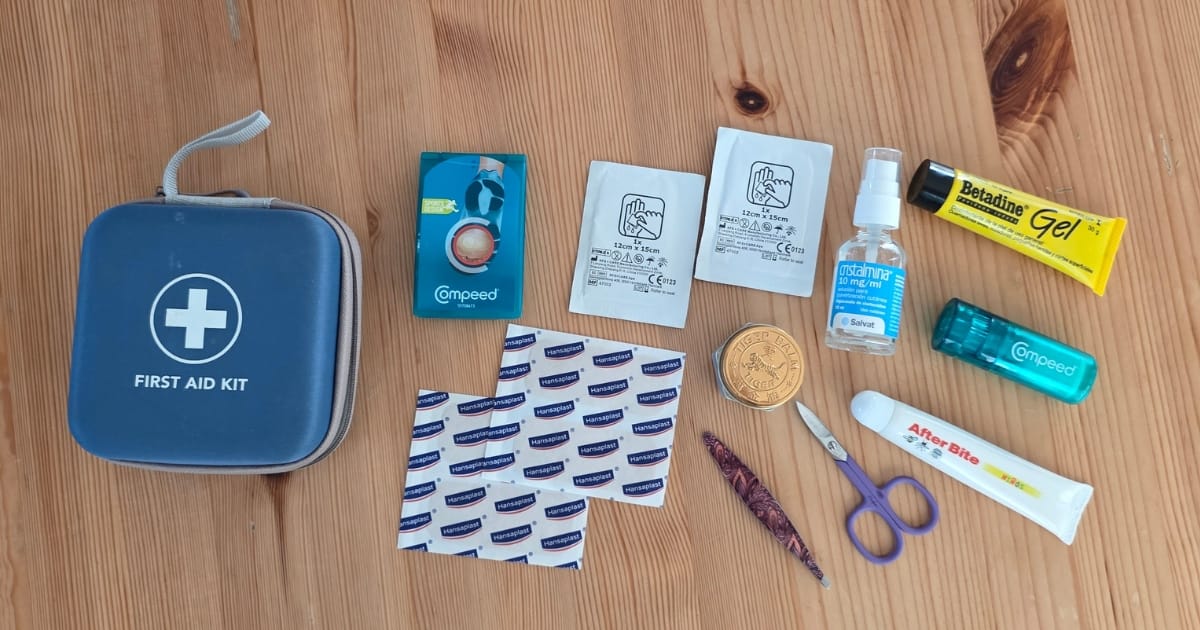
A useful kit includes blister dressings, non-stick sterile pads, tape, a small pair of scissors, and clean spare socks. If you carry sterile single-use needles, keep them sealed and use them only when advised by a healthcare professional. What you use matters less than knowing how to use it cleanly and checking that it works with your particular shoes.
Join The Community
Get the latest Camino guides, packing tips, and historical insights delivered to your inbox. Join a community of fellow pilgrims preparing for their journey.
The Camino asks a lot of your feet, but pain is not something you must simply accept as part of the experience. Stop early, protect the skin carefully, and adjust what caused the rubbing. A slower, more comfortable day can still carry you exactly where you need to go. Buen Camino!