
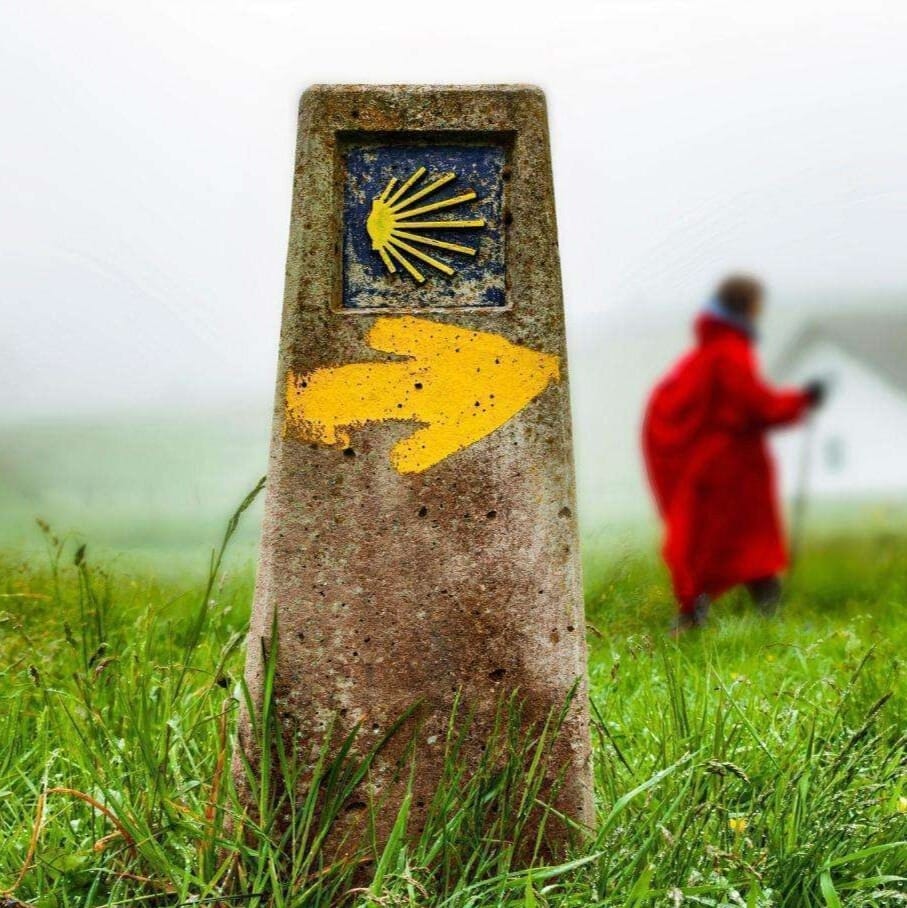
Walking the Camino de Santiago is a journey rich with symbols that inspire and guide pilgrims. From the iconic scallop shell to the yellow arrows painted along the path, each sign carries deep history and spiritual meaning.
1. The Scallop Shell (Concha de Vieira)
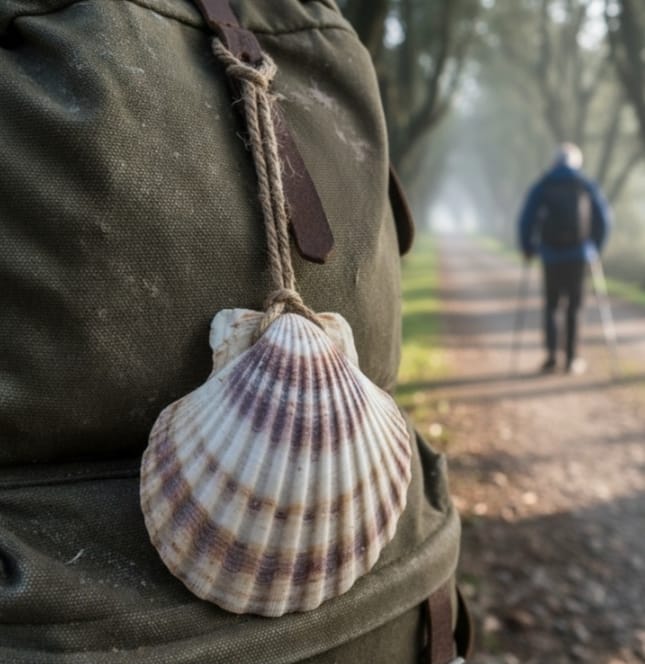
Form: Fan-shaped shell with radiating grooves.
History: Since medieval times Pilgrims have carried the shell home as proof of completing their journey. It was also a cup for drinking water along the way. It is one of the symbols of El Camino that resonates most in the public perception.
The scallop shell was first associated with the Camino in the medieval Latin guide, the Codex Calixtinus, compiled in the mid-1100s. This historic manuscript is made up of five books, the last of which is a practical guide to the French Way. It includes route descriptions, places to stay, relics to visit, and notes on local customs. It even reviews hospitality, food, and the character of the regions—exactly the kind of advice a pilgrim still finds useful today.
Meaning: The grooves represent the many routes leading to Santiago de Compostela. Today, it marks the pilgrim path and serves as a symbol of hope and arrival.
2. The Yellow Arrow (Flecha Amarilla)
Form: Simple yellow painted arrow on rocks, walls, or signposts.
History: Revitalized by Father Elías Valiña in the 1980s, the modern Camino owes much of its current visibility to his work. Born on the Camino near Sarria and educated in Salamanca, Valiña later became the parish priest of O Cebreiro. He dedicated his life to both the people living along the route and to promoting the Camino itself. For him, the Way was not only a deeply spiritual tradition but also a socioeconomic mission that could help revive rural communities.
Valiña tirelessly promoted the Camino and its values, publishing studies, giving lectures, and persuading politicians and local councils to support its renewal. He helped strengthen the network of albergues that we take for granted today. After decades of national and international conflict, the Camino had declined significantly; from just a few thousand determined pilgrims in the mid-twentieth century to the millions who walk it today, Valiña played a vital role in its rebirth.
The yellow arrow, now synonymous with the Camino, was his ingenious solution to guide pilgrims long before modern technology was available—and in many remote areas, where it still isn’t. During the 1980s, he and a small group of volunteers began marking the Camino Francés, painting arrows on walls, posts, stones, and anything else they could find to help pilgrims stay on the right path.
Meaning: A universal symbol of guidance, reminding pilgrims that they are always on the right path.
3. The Cross of Saint James (Cruz de Santiago)
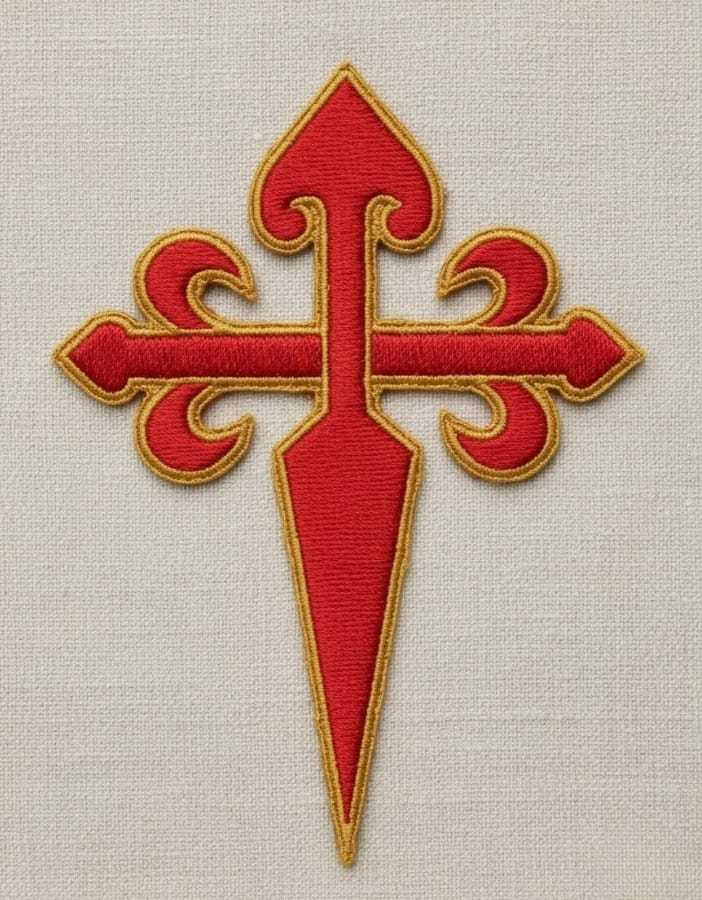
Form: A cross shaped like a sword, with fleur-de-lis arms.
History: Associated with the Order of Santiago. The order was founded around 1170 in Cáceres, in what was then the Kingdom of León. It was founded as a religious military order similar to the Templars or the Hospitallers. Its dual purpose was to protect pilgrims and to fight in the reconquista of the Iberian peninsula. Today it is no longer a military order and is dedicated to charitable and cultural activities. The current Grand Master is King Felipe VI of Spain.
Meaning: Represents faith, courage, and spiritual protection.
4. The Botafumeiro
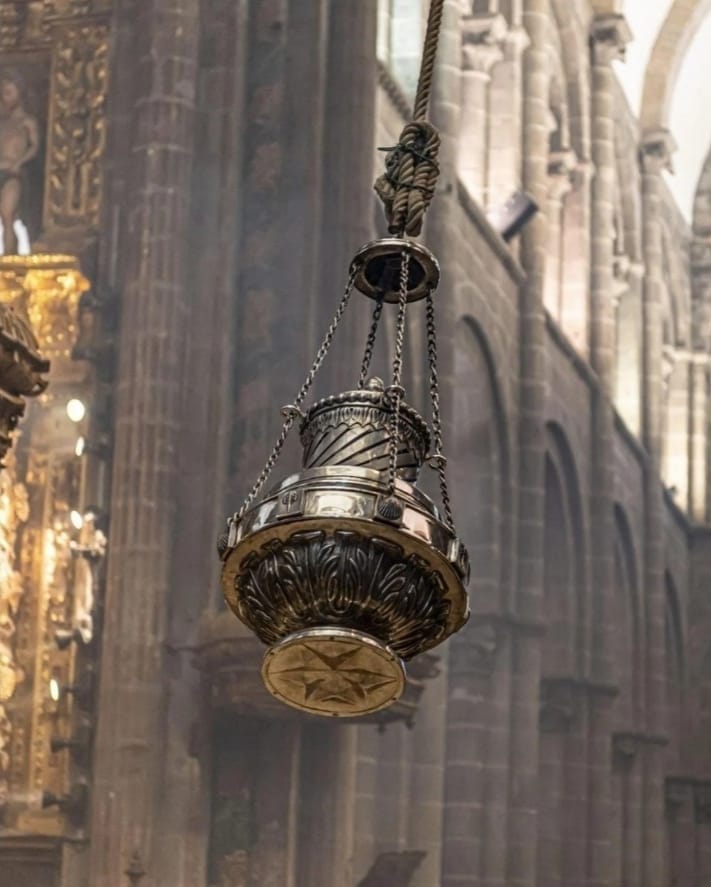
Form: The Botafumeiro is one of the most impressive traditions of the Camino de Santiago and a highlight for pilgrims visiting the Cathedral of Santiago de Compostela. This giant incense burner, weighing around 80 kilograms and measuring over 1.5 meters, swings dramatically across the cathedral’s nave, filling the air with aromatic clouds of incense.
History: Its origins date back to the Middle Ages, when many pilgrims arrived after long journeys without proper facilities for washing. Incense was used to purify the air and symbolically cleanse the spiritual space. While its practical purpose has changed over time, the Botafumeiro remains a powerful symbol of purification, prayer, and communal devotion.
The device is maneuvered by specially trained men called tiraboleiros, who control the ropes and set the vessel swinging in a wide arc that can reach speeds of up to 68 km/h. The ritual is both breathtaking and deeply meaningful, often considered the emotional climax of a pilgrim’s visit. Note: see it in action most Friday evenings, during the Pilgrims Mass.
Meaning: A symbol of purification and celebration upon reaching Santiago.
5. The Pilgrim’s Passport & Compostela
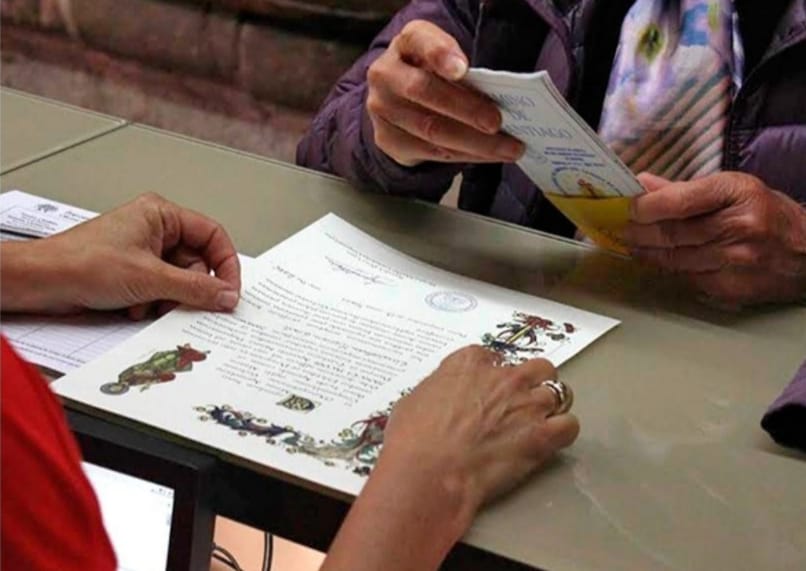
Form: The Credential (a stamped booklet) and the Compostela (certificate). They are granted by the Pilgrim’s Office as recognition of the completed pilgrimage. The Compostela is written in Latin and features traditional religious symbols linked to Saint James. It includes your name (also written in Latin) and confirms that you completed the Camino “with devotion.”
History: Originated as medieval safe-conduct papers; now an official record of El Camino.
Meaning: A personal testimony of both physical and spiritual pilgrimage.
Who: The Compostela is awarded to those who: Walk at least 100 km or cycle at least 200 km, and complete the journey for spiritual, religious, or reflective reasons. During the route, pilgrims must collect stamps (sellos) in their Credential, the pilgrim passport. These stamps are found at churches, cafés, albergues, hostels, and public buildings, and they serve as proof of the distance completed.
Where: Pilgrims collect their certificate at the Pilgrim’s Reception Office in Santiago. In busy seasons, it’s recommended to register online first to avoid long queues.
Note: Symbolic meanings and historical interpretations shared on this page are cultural and devotional in nature. They reflect commonly understood perspectives among pilgrims and communities and are not official statements from any religious or institutional authority.


Leave a Reply