
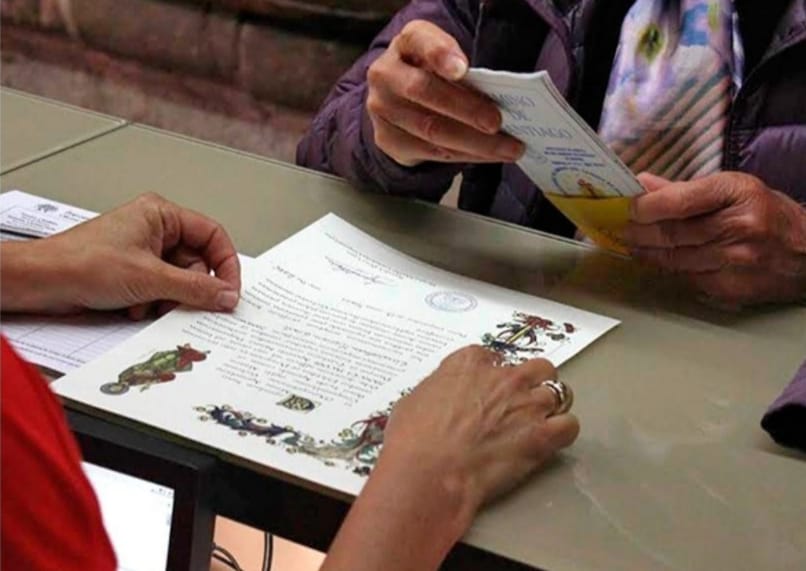
For centuries, pilgrims have concluded their journey to Santiago de Compostela by seeking official recognition. This article provides a comprehensive, step-by-step overview of the 2026 requirements for obtaining your official certificate, The Compostela.
Basic Documentation
1) La Compostela / Camino Certification
The tradition of pilgrimage certification began in the 13th century with written cartas probatorias. The certificate is more than a souvenir; it is the official attestation of a spiritual or personal journey, connecting modern pilgrims to a thousand-year-old heritage. This document is known as La Compostela and you get it, once you have completed your journey, from the Pilgrims Reception Office at Rúa das Carretas, 33, 15705, Santiago de Compostela.
2) The Pilgrim’s Credential: Your Essential Journey Companion
The Pilgrim’s Credential (la Credencial) functions as your “pilgrim passport” with it you can:
- Access Accommodation: Stay in pilgrim-specific albergues.
- Document Your Route: Collect sellos (stamps) along the way from qualified churches, cafes, and hostels.
- Qualify for the Compostela: Serve as proof of distance at the Pilgrim’s Reception Office in Santiago.
As you prepare for your Camino de Santiago, one of the most important things to arrange is the Credencial, the official pilgrim’s passport. This small booklet identifies you as a pilgrim, allows you to stay in many albergues, and is required to receive the Compostela at the end of your walk. You should obtain the Credencial before you begin your Camino. According to the Pilgrim’s Office in Santiago de Compostela, the Credencial is issued by authorised bodies such as pilgrim associations, parishes, confraternities, and pilgrim hostels. On their official website, the Pilgrim’s Office provides a searchable database of authorised places that supply the Credencial, both within Spain and internationally. You can also obtain it directly from the Pilgrim’s Reception Office in Santiago, which is open daily except on 25 December and 1 January. Once you have your Credencial, remember to fill in your personal details and collect stamps (sellos) along the route to document your pilgrimage.
Source: Pilgrim’s Office / Oficina del Peregrino – www.oficinadelperegrino.com
Before you learn their history, form, and meaning please take a moment to explore our Camino-inspired designs at:
Official Requirements for The Compostela (2026 Update)
To preserve the integrity of the pilgrimage, the Cathedral of Santiago enforces specific distance and documentation protocols.
1) Minimum Distance Requirements
Following a significant update in February 2025, pilgrims now have more flexibility in how they complete their kilometers:
- On Foot or Horseback: At least 100 km.
- By Bicycle: At least 200 km (Traditional bicycles only; e-bikes are not eligible).
- The “Continuous Section” Rule: The required distance can be completed on any continuous section of a recognized route, provided the journey concludes with the final stage into Santiago de Compostela.
2) Stamping (Sellos) Protocol
You must adhere to the “Two-Stamp Rule”:
- Collect a minimum of two stamps per day.
- One stamp at the start of your daily stage and one at your destination.
- Collect stamps in chronological and geographical order.
3) Comparing the Official Certificates
Upon arrival, you can request different types of accreditation based on your journey and intent.
| Feature | The Compostela | Certificate of Distance |
|---|---|---|
| Purpose | Sacred/Spiritual Attestation | Factual/Detailed Record |
| Language | Latin | Spanish/Latin |
| Cost | Free | €3.00 |
| Details Included | Pilgrim’s Name (in Latin) | Route, Starting Point, & Total KM |
On Arrival
1) What to do when you arrive in Santiago to get The Compostela
The Pilgrim’s Reception Office (Rúa Carretas, 33) uses a digital system to manage arrivals efficiently.
- Pre-Registration: Complete the online form via the QR code outside the office.
- Obtain a Queue Ticket: Scan your registration code at a kiosk inside to get a numbered ticket.
- Monitor the Queue: Use your phone to track your position in line in real-time.
- Verification: Present your stamped Credencial to the volunteer when your number is called.
Pro Tip: Purchase a sturdy cardboard tube (€2-€3) at the office gift shop to protect your certificates for the journey home.
2) A 500-Year-Old Pilgrim Perk
Across the Plaza Obradoiro from the Cathedral stands the magnificent Hostal dos Reis Católicos, today a 5 star luxury hotel. Its history is deeply intertwined with the Camino. It was founded by the Catholic Monarchs, Ferdinand and Isabella, as a grand pilgrim hospital to provide care and shelter to those who arrived in Santiago after their arduous journey. The Hostal opened its doors to pilgrims in 1509. It became the Parador / hotel it is today in 1954.
Incredibly, a tradition of hospitality from its founding days survives. As a continuation of its original purpose, the hotel offers a free meal to the first ten pilgrims each day who arrive and present their newly-issued Compostela. For a modern pilgrim accustomed to paying for everything, this simple act of charity isn’t just a free lunch; it’s a powerful, tangible connection to the centuries of pilgrims who arrived with nothing but their faith and what they carried on their backs.
Planning your 2026 Camino? Visit our store for Camino insired apparel to make your journey more comfortable.
Leave a Reply